Wojciech Kurzacz-Piasecki
Released 19 Aug, 2025
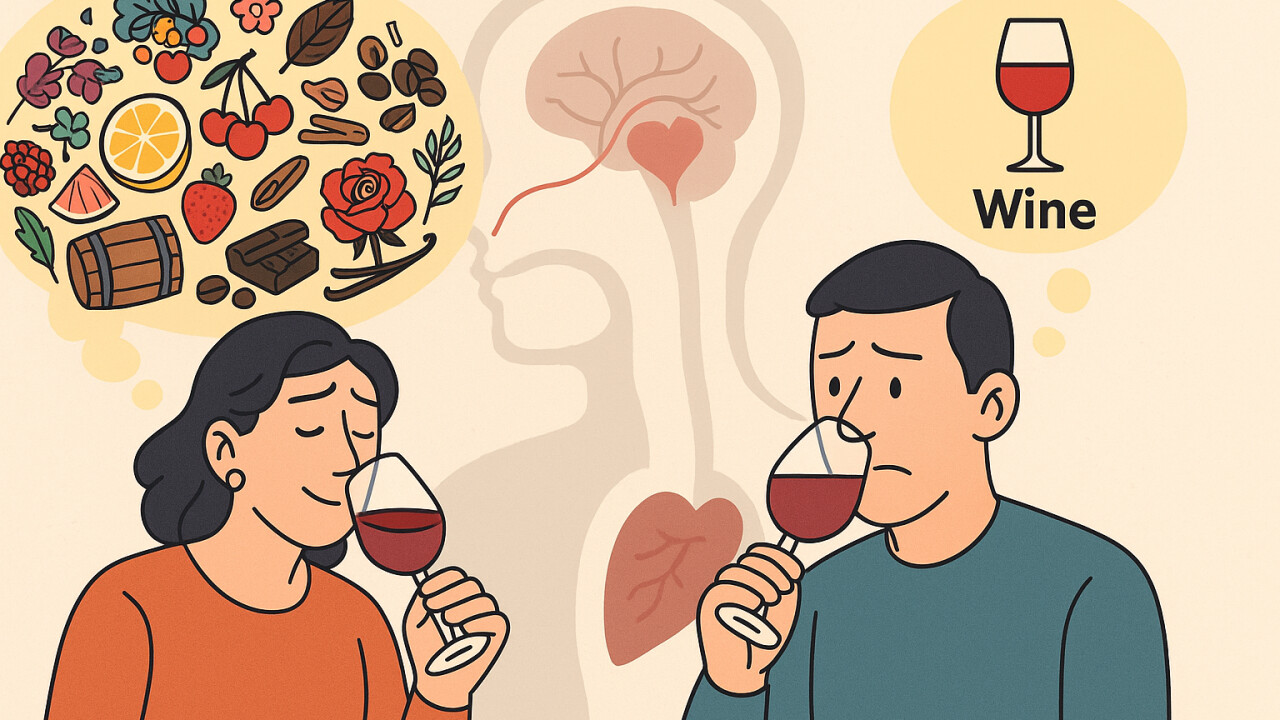
One of the great myths of wine is that tasting is about perceiving endless aromas. In reality, much of it is about learning a code, memorising what we’re told a wine should taste like, and repeating it back.
I learned this the hard way. When I first arrived in Australia, I enrolled in WSET 3. The teacher began listing flavours I had never even heard of. One stuck with me: butterscotch. In South America, we don’t even have butterscotch. Curious, I typed it into Google Translate, it came back as “butter from Scotland.” I laughed, then searched to see why Scottish butter should taste so different from Brazilian or Australian butter, but of course I found nothing. That’s when I asked myself: how on earth can people from overseas be expected to pass an exam filled with tastes and smells that don’t even exist in their lives?
That’s when it clicked: this had nothing to do with my ability to smell. It was about learning the code. Even in WSET 4, where I failed theory, I still achieved a Distinction in tasting. Not because I could magically smell gooseberry or elderflower, things I had never once encountered, but because I had memorised the script well enough to reproduce it. The truth is, I never saw or smelled 70% of the aromas I was told I “should” find. But I could still got most of them right, simply because my memory was good.
And that moment revealed something important. Wine tasting often isn’t about what we actually perceive. It’s about the words, the cues, the associations we’ve been trained to repeat. Which raises a bigger question: are we really teaching people to taste wine, or just to perform?
To help explore this question, I’ve invited Wojciech Kurzacz-Piasecki, a sensory and consumer scientist and flavour designer with a particular focus on wine, to share today’s newsletter. He holds a degree in Food Science and Technology, and a Master of Science in Human Nutrition and Food Evaluation, from the Warsaw University of Life Sciences. Wojciech has worked across confectionery, meat, and alcoholic beverages before moving to the Mosel region of Germany, where he rediscovered his passion for wine. Now based in Geneva, he combines research with practice - running the Instagram project @grapescape_swisswines with his husband, while deepening his study of human perception, wine, and flavour.
In this article, he challenges the myths of tasting by asking a simple but provocative question: how do we really perceive aromas, and how much of what we say in wine is memory, training, and expectation rather than pure sensation?
[center]
[/center]
Consumer expectations are shifting fast, away from rigid codes and towards experiences, authenticity, and connection. For business leaders, this is not a small change. It’s a fundamental question: will the wine industry adapt, or be left behind?
That’s why we are creating Rethinking Wine, a global platform where CEOs, entrepreneurs, sommeliers, winemakers, importers, distributors, retailers, marketers, educators, and innovators from every corner of the wine world come together. It’s not about repeating the old scripts. It’s about re-imagining how wine is communicated, marketed, and experienced in a world being reshaped by new systems, from decentralised networks to AI. These forces are already changing the way we live, buy, and behave. To stay relevant, the wine industry must move beyond heritage scripts and begin speaking in ways that resonate with values of inclusivity, authenticity, and emotional connection.
We already have people from more than 80 countries joining the movement, from small wineries to global businesses, all with one goal: to shape the future of wine together.
If you believe leadership means creating the future, not just reacting to it, then this is your invitation to step in.
Join the waitlist for Rethinking Wine Here
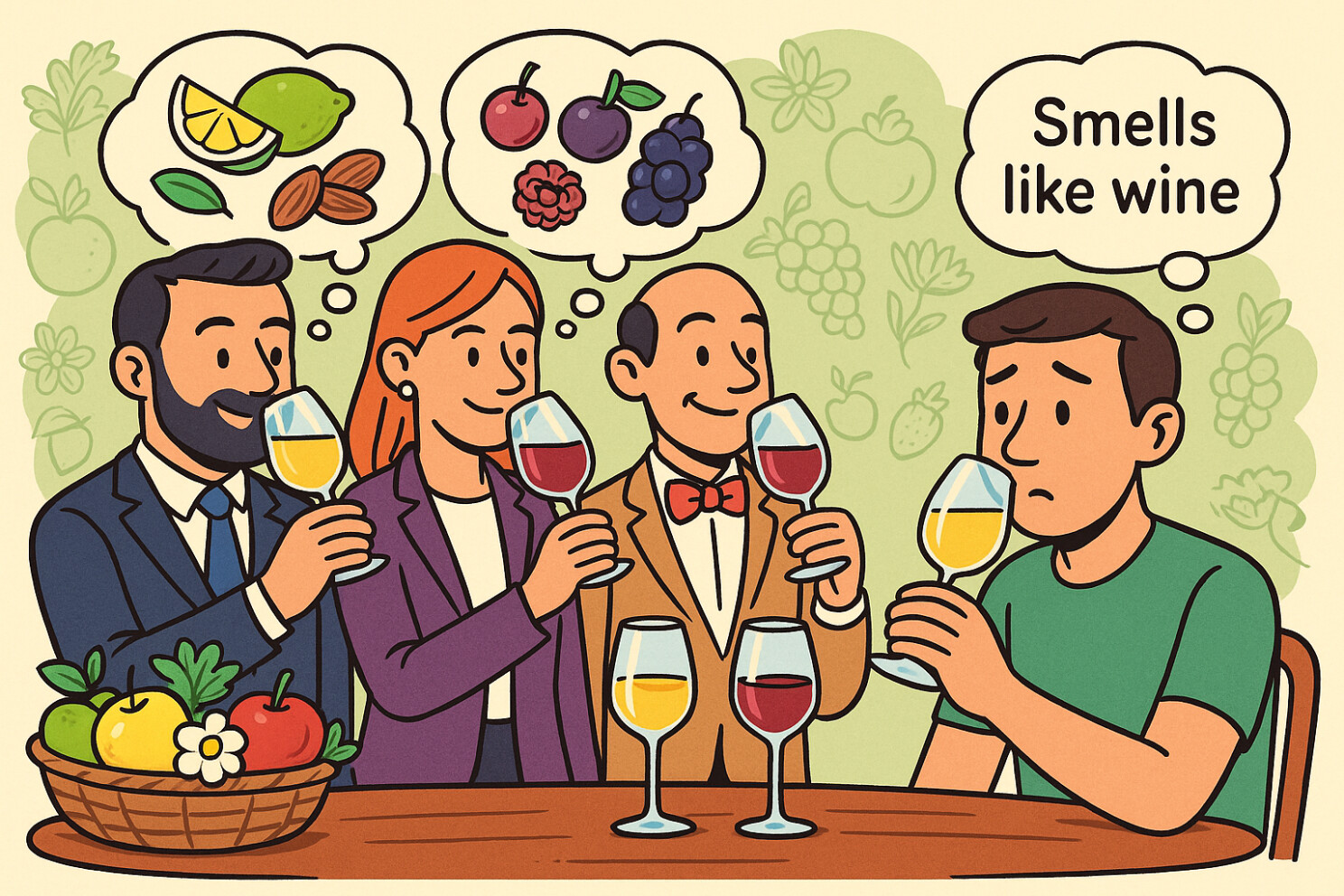
Has it ever happened to you that you poured someone a wine which for you was rich and nice but they, when asked about the perceived aromas, answered: “It smells exactly like wine”? Or maybe you have been on the other side, participating in a wine tasting during which the sommelier or wine expert was explaining an endless list of perceived aromas, and for you it smelled like apples… maybe apples and lemons. Well, there is a scientific explanation for both patterns: describing the unlimited richness of wine aromas; and perceiving almost nothing.
The sense of smell, for many years, was considered to be inferior to other senses. It is a relatively new discovery how sensitive our noses are (Mather, 2016). Humans may be able to discriminate up to 1 trillion olfactory stimuli (Bushdid, 2014), however the discussion on that number is ongoing. But let’s not be fooled by that, as this doesn’t mean we are all super sniffers. Let’s take a closer look at human smelling ability.
How do we perceive aromas?
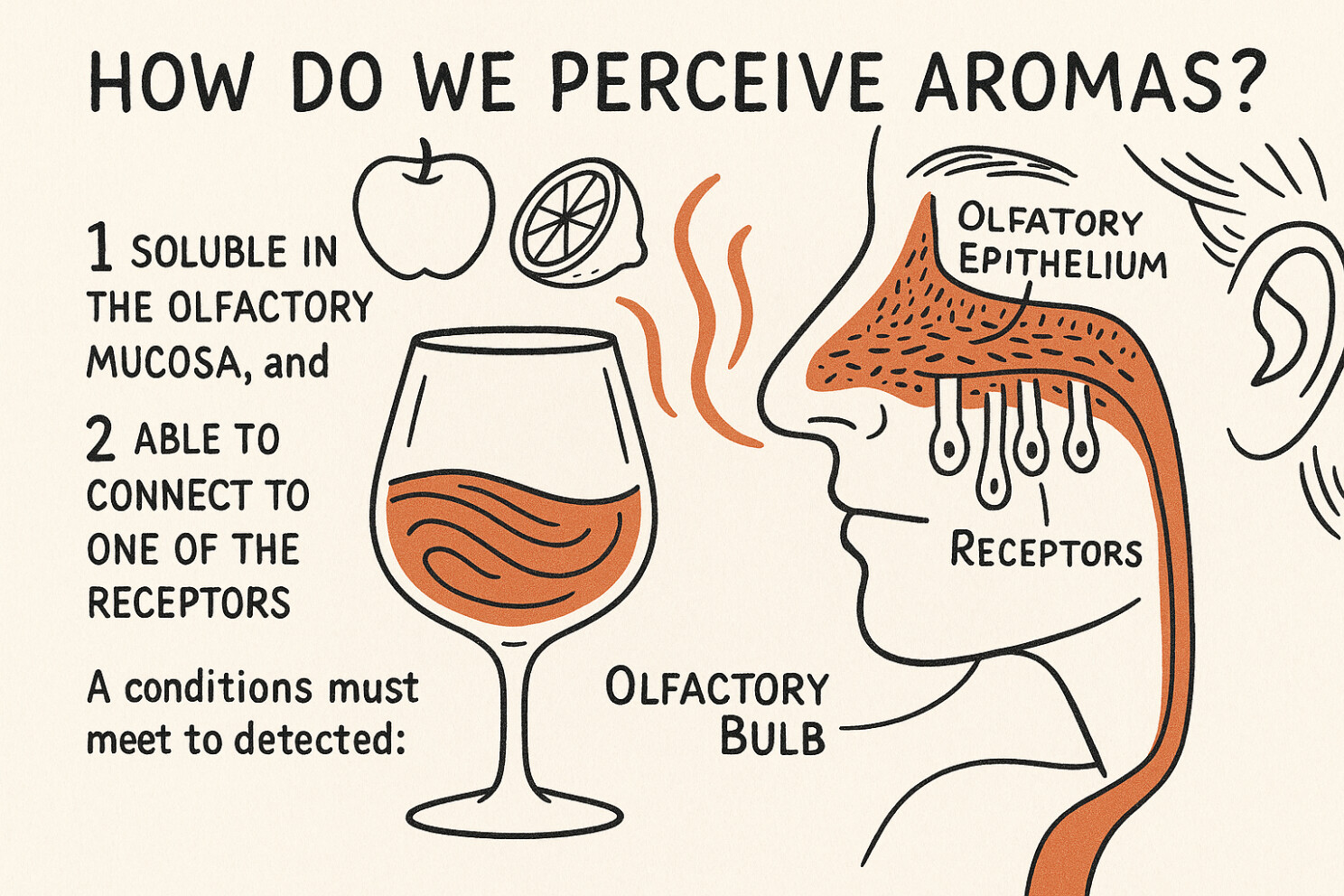
Aroma perception starts in our noses on the patch of tissue called the olfactory epithelium. This tissue contains about 6 million receptors, which are constantly renewed (each receptor cell lasts for around 60 days). Receptors are immersed in moist tissue, called olfactory mucosa, that covers the inside of the nose.
Each volatile compound needs to meet two conditions to be detected: 1) it must be soluble in the olfactory mucosa, and 2) it must be able to connect to one of the receptors. Our aroma receptor system is not compound specific, meaning that the same receptor can be responsible for detecting different volatile compounds.
As humans we are more sensitive to some aromas than to others. For example, we are extremely sensitive to methanethiol, an aroma compound that is added to the domestic gas supply as a safety feature to aid the detection of gas leaks. Humans can detect 3 drops of methanethiol diluted in an Olympic-sized swimming pool. However, we are much, much less sensitive to, e.g., methyl salicylate, the compound responsible for wintergreen plant aroma. Some people can also have complete odour blindness of some (or in severe cases, all) aromas, as their genes responsible for perception of those aromatic compounds are switched off.
Overall, perception of aromas is personal and highly influenced by genetics, but also by previous experiences, physiological state (e.g., pregnant women are more sensitive to smells), cultural background, and many other factors.
It is worth mentioning here that our sense of smell is also unique in a way that is directly connected to our brains. Receptor cells are connected to a neural structure in the forebrain called the olfactory bulb. What is important, “the messages” from the olfactory bulb are transmitted to the primary olfactory cortex, but also to the amygdala, which is associated with the creation of our emotions (Mather, 2016).
Detection does not equal recognition
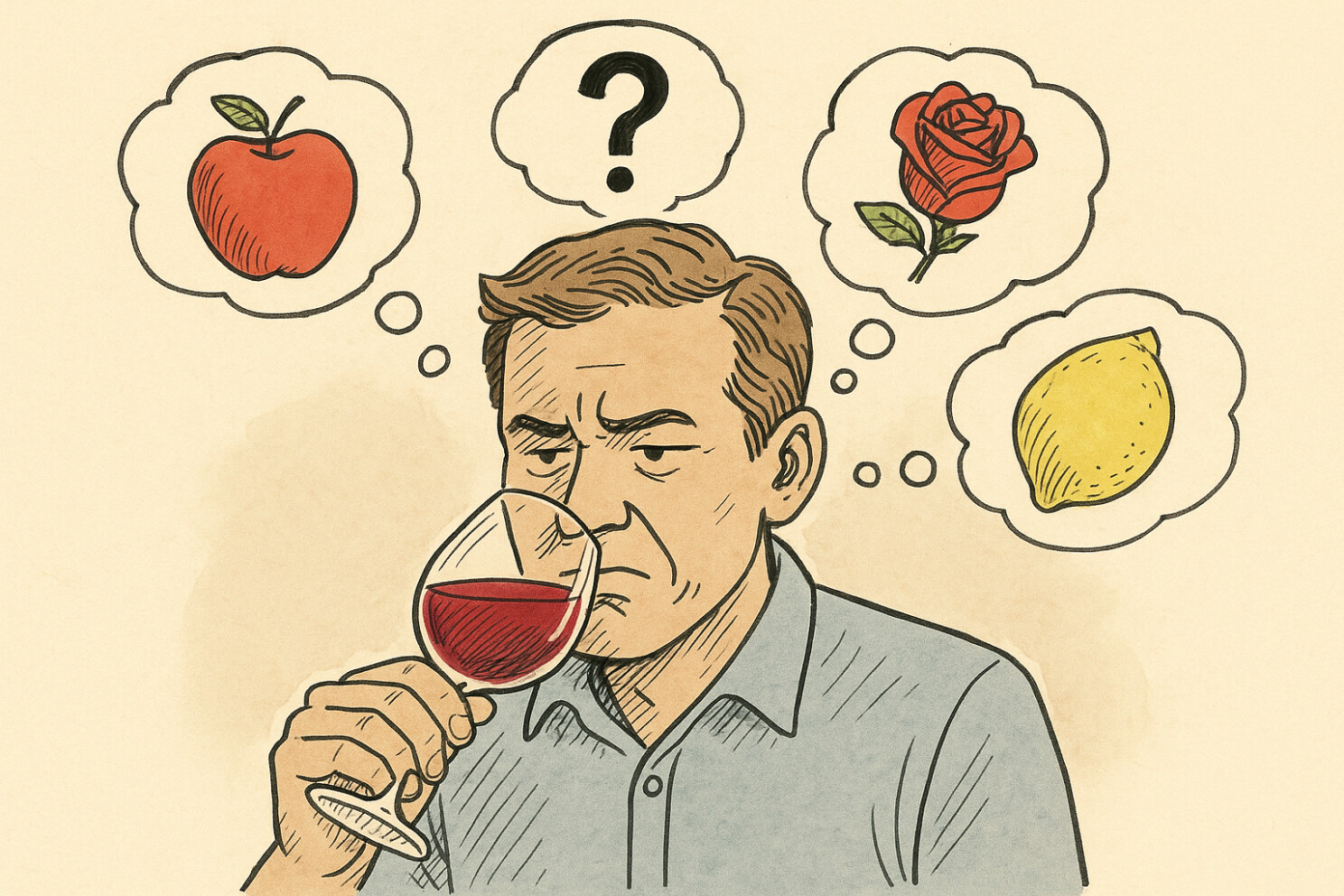
All the above explains how we detect aromas but doesn’t explain how we identify them.
As Mather mentioned in his “Foundations of Sensation and Perception” (2016): “humans are quite poor at identifying odors.”
In general, we can identify up to 5 aromas in a complex odourant mixture, but not only is training required to achieve that, but also our ability of naming each aroma is dropping with the raising complexity of the mixture (Malfeito-Ferreira, 2021).
One of the theories explaining such weak ability of aroma identification is called the misfit theory of spontaneous conscious odor perception (MITSCOP). The MITSCOP theory suggests that we don’t consciously recall every odour we encounter, but rather, we develop implicit expectations about what smells should be present in certain situations. When a smell “misfits” these expectations, either by being novel, changed, or associated with a different context, it becomes consciously noticeable (Köster et all., 2014).
Not actively processing all perceived aromas might be an evolutionary adaptation that saves us from sensorial overload (just imagine constantly processing thousands of odourants when you breathe). This is supported also by “the fact that olfaction is a sense with complete adaptation. It means that the sensitivity for sustained monotonous stimulation is completely lost after a few minutes and that recovery from adaptation after cessation of the stimulus is slow (Köster et all., 2014).
Of course, it is possible to actively smell something by sniffing, but again, our species is not very good in that. It might be an ability that we lost developing erected posture.
Odours and emotions
However, while identification of smells is not our strongest point, we have developed strong emotional response to the odourants. Remember that the olfactory track is connected to the amygdala, the center of processing emotions? Our olfactory memory is strong but leads us usually to some past emotions, pleasant or unpleasant experiences, rather than names or sources of the aroma. It might be even that the emotions are not a result of perceived aromas but are an inseparable part of the perception (Malfeito-Ferreira, 2021 and 2023).
The connection between perceived aroma and hedonic pleasure or emotions is also very intimate. It was shown that learning the name of the aroma that evokes strong emotions causes loss of personal connection with that aroma.
“Objectifying the odor by naming it, makes it lose the emotional bond with specific life situation, which is so typical for the effect of odors in everyday life” (Köster et all., 2014).
Moreover, putting a lot of effort into naming flavours or aromas makes recognizing them more difficult (Malfeito-Ferreira, 2021).
Sniffing wine
Nowadays wine tasting is highly related to describing aromas and flavours. But is it possible, considering all the limitations of our sense of smell and the fact wine is a very complex aromatic mixture, to extract from the glass all the aromas and flavours that wine textbooks describe for each grape variety? Well, only to some extent.
There is a concept introduced by Ferreira (2010), which is in line with the MITSCOP theory, and which says that “the aroma of wine is characterised by a few molecules (about 30) that act as a buffer (the “aroma base”) because differences in their concentrations are not reflected in different aromatic perceptions. These molecules are the same in white or red wines and only the so-called “impact molecules”, or families of molecules, may break the aromatic “buffer”. Examples of impact volatiles are terpenes in varieties like Muscat or off-flavours. In the absence of impact molecules, wines may be described as odourless and different varietals are then indistinguishable and have a light, sweet, pungent, alcoholic, and somewhat fruity aroma” (Malfeito-Ferreira, 2021).
In other words, when we taste wine without knowing what it is, our only expectation is to sense “wine.” So, unless the wine is particularly aromatic (like Muscat or Sauvignon Blanc), it’s very difficult to extract any specific aromas from the “aroma base,” as there are no “misfit” aromas breaking the aromatic “buffer”.
Do wine experts get more aromas from each glass?
If perceiving wine aromas is so difficult, how is it possible that wine experts and sommeliers are always describing them in such details? There are many factors making that possible out of which 3 are the most relevant.
But first, one more thing needs to be said about aroma perception – in daily life we can feel that we are able to recognize and describe at least hundreds of smells. Coffee, tea, all the fruits and vegetables, spices and herbs, flowers, all the unpleasant odours like dog poo, urine, rotten food, garbage, and so on. This is easy because of visual clues. Think about it, usually, when you notice some aroma, you immediately start to look around in search of source of the smell. Or when you are eating an apple, you know that you are eating an apple. Visual recognition leads to our aroma recognition.
There is famous research in which researchers were serving white and red wine to the group of wine experts. The task was to describe the aromas of both samples. With no surprise wine experts used classical white wine attributes, like honey, lemon, almond, or apple to describe white wine, and terms like cherry, blackcurrant, and raspberry when describing red wine. In reality, they were trying the same white wine but to one sample odourless, red food colouring was added (Morrot et all., 2001). This shows the power of visual context in assessing aromas, and wine experts mastered using that visual context in wine aromas and flavours evaluation.
Another factor is the learning process. Current wine education is highly concentrated on building olfactory mental imagery in the sense that wine experts are learning by heart what aromas and flavours of wines are expected from each grape variety, each style and region. This is more connected to linguistics than to perception, as wine experts don’t learn so much how to perceive and recognize different sensory modalities but rather how to build mental library of ready-to-use description.
It was “observed that experts described wines based more on linguistic prototypes than on their sensory properties. Accordingly, experts identify the characteristics of a wine by comparing models and by matching those features previously associated with those models. […] experts and novices who are familiar with those models activate a “wine tasting script” to describe wines” (Malfeito-Ferreira, 2021).
This process is called “filling-in” or “guessing the rest”. For example, if one perceives black peppery, it is most likely Syrah wine, though the person will use also every other aroma descriptor attributed to Syrah wines.
Both above factors are connected to the anticipation bias, which means that we expect how something will smell, and the aromas appear in our mind even before smelling (Malfeito-Ferreira, 2023).
As wine experts are trained in using all the cues, they can deduce what they are drinking (Syrah example) and how they should describe it. If the tasting is not blind, the task is easy. The grapes variety, region and producers are already known, so everyone with sufficient knowledge can use their mental repository to describe the wine rather than their senses.
In conclusion, experts’ more detailed descriptions of wines are “more related to conceptual knowledge than to improvements in flavour sensitivity” (Malfeito-Ferreira, 2021). Also, their ease of describing aromas and flavours is not an effect of enhanced semantic memory and linguistic capabilities but rather higher courage in expressing themselves in comparison to not trained people. Indeed, experts don’t have much higher sensitivity than the general population and some advantages in aromas and flavours recognition they may present are mostly due to constant tasting and intensive linguistic training (Malfeito-Ferreira, 2021).
Key takeaways:
- Perception is individual, it is influenced by many factors and two people rarely will perceive the same wine in the same way. Each perception is subjective, we are different, and we have different sensitivities.
- Emotions are a natural part of aromas and flavours perception. If you connect each wine you are trying to your emotional state, situation, and people who are accompanying you, the wine will most probably be much more memorable and easier to recall than if you made technical tasting notes.
- You can perceive 3 to 5 aromas out of a glass of wine and only if: 1) you have trained yourself before with recognizing them, 2) the wine contains outstanding aromatic compounds.
- Re-smelling the same glass of wine for a longer time to capture more aromas is pointless, as you probably already get sensory adaptation, meaning your sense of smell went on vacation and doesn’t want to be bothered anymore by active sniffing.
- Wine experts produce richer (and longer) tasting notes because 1) they have memorized “wine tasting script” to describe wines, 2) they have more courage to express themselves on the topic they know well.
Meet the Author
[center]
[/center]
Wojciech Kurzacz-Piasecki is a sensory and consumer scientist, as well as a flavour designer, with a particular focus on wine. He holds a Bachelor of Engineering in Food Science and Technology and a Master of Science in Human Nutrition and Food Evaluation, both from the Warsaw University of Life Sciences.
He has worked as a sensory and consumer scientist and consultant across various sectors, including confectionery, meat, and alcoholic beverages. In 2020, he moved from Poland to the Mosel region in Germany, where he reconnected with his passion for wine. After relocating to Geneva at the end of 2024, he and his husband launched the Instagram project @gerapescape_swisswines, dedicated to discovering and promoting Swiss wines, while also exploring new approaches to wine tasting.
He advocates for choosing local wines and supporting artisanal wineries over industrial production and standardized international styles. Currently, he is deeply engaged in research on human perception, with a particular emphasis on wine. This text represents the beginning of a broader literature review on the perception of wine aromas and flavours.
References:
Bushdid, C., Magnasco, M.O., Vosshall, L.B., Keller, A. (2014). Humans Can Discriminate More than 1 Trillion Olfactory Stimuli. Science 343, 1370-1372.
Ferreira, V. (2010). Volatile aroma compounds and wine sensory attributes. In A.
Reynolds (Ed.), Managing wine quality, Volume 1: Viticulture and wine quality (pp. 3–28).
Cambridge, UK: Woodhead Pub. Köster, E.P., Møller, P., Mojet, J. (2014). A “Misfit” Theory of Spontaneous Conscious Odor Perception (MITSCOP): reflections on the role and function of odor memory in everyday life. Front Psychol. Feb 11;5:64. https://doi.org/10.3389/fpsyg.2014.00064
Malfeito-Ferreira M. (2021). Fine wine flavour perception and appreciation: Blending neuronal processes, tasting methods and expertise. Trends in Food Science & Technology, 115, 332–346. https://doi.org/10.1016/j.tifs.2021.06.053
Malfeito-Ferreira M. (2023). Fine wine recognition and appreciation: It is time to change the paradigm of wine tasting. Food Research International 174, 113668. https://doi.org/10.1016/j.foodres.2023.113668
Mather G. (2016). Foundations of Sensation and Perception. A Psychology Press Book.
Morrot, G., Brochet, F., Dubourdieu, D. (2001). The Color of Odors. Brain and Language 79, 309–320. https://doi.org/10.1006/brln.2001.2493