Priscilla Hennekam
Released 28 May, 2024
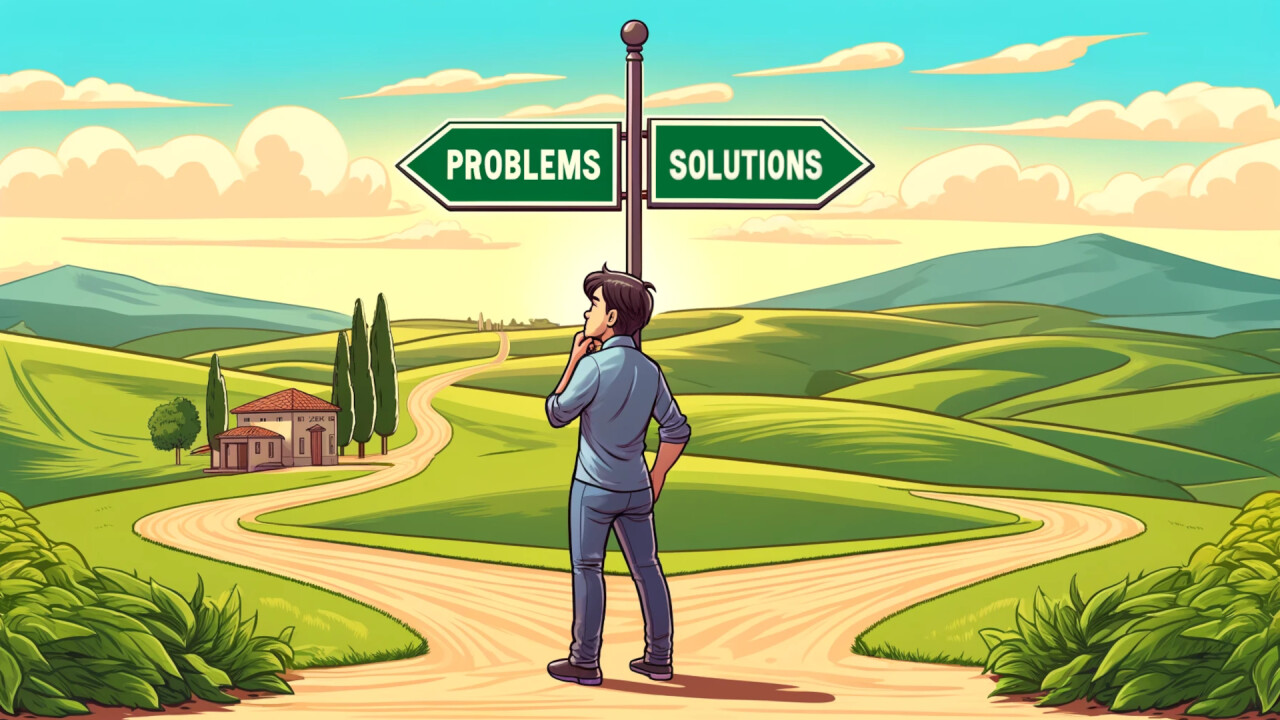
A friend pulled me up recently, for always talking about the problems, and not talking about solutions. It made me #Rethink how I have been writing, and what my focus should be. Our words are powerful, so let’s stop reinforcing problems, and start discussing solutions.
In this edition I have reflected over the last 6 months, the problems I have been talking about, and the weak, generic solutions (sorry) that most people are talking about. Yes, we want more sales, but the solution to achieve this is not simply deciding to “sell more”.
I have proposed 5 areas to focus on – mini-solutions, if you will. None of these on their own will solve everything, but I think they’re good places to start. The idea of “Rethinking the Wine Industry” is that we all help each other, so I challenge all of you to #Rethink too, and to share your thoughts and ideas. What have you tried – especially what has worked for you? Let’s do this, let’s rebuild our industry.
Welcome, or welcome back, to “Rethinking the Wine Industry”. This is a newsletter by the wine industry, for the wine industry. Every month I will post one of my own articles, then one from somebody else in the community. Everyone who believes they have something valuable to share is very welcome to publish an article to this newsletter. Think of this as “TED for the wine industry” – please send an email to info@hennekamwines.com to be part of this project. I will share your name and contact details with the article so people can get in contact with you directly if they wish.
OK, let me share my thoughts…
Rethinking our focus
A few times recently, while chatting to different people, I realised that I am always talking about the PROBLEMS in the wine industry, and I think most people are the same. But everyone KNOWS the problems – let’s start looking for SOLUTIONS.
And before you all start telling me about increasing DTC, export marketing, wine tourism, etc… to me these are Band-aid solutions. They will help, but only so much, and they’re not addressing the underlying issues. So let me propose 5 other, more difficult, uncomfortable solutions, that can help for the long-term.
In my humble opinion, there isn’t one magic pill, there isn’t a universal and unique solution, there isn’t a simple thing we can do, or change that will save the whole wine industry’s problems tomorrow. We have ignored the problem for decades, and it will take time to fix.
After reading, studying, and talking with so many people, I’ve come to believe that the biggest problem in the wine industry is our (collective) mindset.
-
We’ve created an industry where our EGO is more important than making money.
-
We have a wine education system getting the certificate is more important than learning how we can solve real problems.
-
Wine has become like a religion, where if you want to drink wine, you need to convert to our religion, learn our terminology and obey our rules.
By identifying the roots of our problems, we can find REAL solutions.
Solution number 1: Understand your financials.
It’s incredible how many wineries don’t know their true cost of manufacturing. I first realised that when I started helping to build a winery from scratch in Brazil. I was trying to figure out the cost of making wines, and I was shocked by the answers from many wine producers who had no idea the true costs of their wines.
“It’s unusual for a winery to make just one or two SKUs. Most make quite a few; and if the winery is not sure what each SKU costs to make or contributes to margin, then it can be very easy for some SKUs to start subsidizing the production of others unintentionally. This drags down your total margin across the business. It starts with COGS - or Costs Of Goods Sold. This is critical to understand for any business owner, but it’s especially important for wineries. Grape costs, fermentation additives used, packaging, production overheads and excise tax should all be included in COGS.” - Nova Cadamatre, MW
Solution number 2: Strong relationship with your partners.
I read and researched about wines that have done very well in the wine industry. I will share the example of DAOU. One of the keys to their success was building strong relationships, because people buy from people. They built trust with their partners, and cared more about people than transactions. They sold their business to Treasury Wine Estates in 2023 in a deal worth almost US$1 BILLION.
Speaking from my own experience in the export market in Australia – I have received so many calls, messages and email from wineries in Australia asking to help them to find business opportunities in Brazil, and I am happy to help some of them to navigate this market - but they need to do their part, too. Most Australian wineries that are already in Brazil have never even travelled to Brazil, never tried to build strong relationships with the importers. Most wineries care more about transactions and not about the relationships. Some of your profit should be used for making more money, you can’t make more money if you do not spend money.
“A key part of the success was George’s excellent relationships with trade partners and consumers over the years. With his love of travel, he is frequently on the road, and in launching the PATRIMONY wine brand, he travelled even more – especially internationally to help the brand gain recognition.” – Forbes.
Solution number 3: Concentrate and learn what matters.
My last post about the wine education system had about 42,000 impressions with 25,000 unique views plus over 500 hundred likes and more than 200 comments. I think I am not alone here. We really need to really learn how to solve problems rather than continue to focus on learning facts. In my humble opinion AI and Tech will come to revolutionize our industry, and these facts won’t matter in the future, when you can obtain them in seconds using AI.
“To be honest, WSET skills are not the solution. Just as my last chemistry exam when I was 16 did not prepare me to be a chemist. What did all of these Diploma graduates do? Work in the wine trade? Keen wine drinkers? Or just qualify to go away and teach more? The Wine Scholar Guild is also growing fast, wine MBAs and sommeliers are everywhere. It does not add up to falling sales.” - Elizabeth Gabay MW
Solution number 4: Make wine education accessible to everyone.
I am originally from Brazil where financially, things are not easy. My dad was an ambulance driver, who drove a taxi on his days off to make ends meet. I didn’t have spare money to pay for my wine studies, and suffered quite a bit to pay for everything, working two regular jobs plus accepting any random extra jobs that came along. Until when do we want to live like this? I believe we study wines today for accomplishment, learning to feel special because we will know things most people do not, and because wine is “sophisticated”. But the reality is that most of us (wine professionals) don’t have the money, and passing these courses does not usually lead to increased opportunities or higher pay grades.
“It seems that the current marketing and selling techniques are used to attract the same older and younger audience. Another comment is that the investment required for top-tier wine education, such as a DipWSET, can be significant. However, current salaries often don’t reflect this investment, leading to a disconnect.” - Eduardo Contreras DipWSET.
In Brazil, most WSET students are doctors, lawyers and other rich people who are studying for passion, rather than to work with wines. Most wine professionals in Brazil cannot afford to. Moving to Australia helped me to pay for my wine studies, but even so, the return on my investment in my wine studies is still negative – I have spent more on my wine studies, than they have contributed to my earnings.
Solution number 5: Let’s break the circle, and break the rules. We want to be free!
To me it seems the younger generation are different. I find that they prefer to share their knowledge, so they can enjoy the experience with others, rather than trying to feel “better” than them. So if the mindset of the (education) consumer has changed, why hasn’t the product? Today we seem to have more qualified educators than willing students. Knowing those deep details doesn’t improve the experience. Let’s break the circle – we don’t need to be wine geeks to enjoy a bottle of wine with friends. Wine should be a fun, social experience, not a full classroom lesson, or laboratory sensory analysis.
Let people enjoy wine however they want. I am guilty of looking down on people putting ice in their wine, or even soft drink or sugar (gasp!). But I’ve changed, and if that’s what makes them happy, let them do that. I’m not going to do it, but that doesn’t mean they can’t… whatever makes them feel HAPPY!
I wish I could see a society where we can have more freedom, where people don’t judge each other for everything we do, and we are not afraid to stand up for our beliefs. We need to lighten up, happiness is more important than silly rules!