
Priscilla Hennekam
Released 12 Nov, 2024
Sales is a connection, not a lesson—it’s about building trust, not teaching facts.
In the wine industry, we can create a million new products, but without someone to sell them, it’s all wasted effort. The REAL issue isn’t the product—it’s our obsession with it. We’re so wrapped up in perfecting wines or creating something different that we can’t see the real problem: it’s not the wine, it’s us.
Somehow, we’ve created a culture of wine professionals who only know how to ‘educate’ people about facts but rarely know how to connect with consumers. It doesn’t matter if we have millions of products if we’re not building a generation of wine professionals who can connect with people and make sales.
“Success in business is all about people, people, people. Whatever industry a company is in, its employees are its biggest competitive advantage.” – Richard Branson
My journey with sales started at age 14 when I wanted a phone but couldn’t afford it. I built a relationship with the lady who sold me dog food for my poodle, always chatting and laughing. One day, I asked if she’d be interested in buying puppies, and that connection led her to buy them from me. I was able to buy that phone—because I focused on a relationship, not a transaction.
Years later, in Argentina, I barely spoke Spanish, and it was my first job in wine—I knew almost nothing about it. But I leaned on what I had: humor, friendliness, and a genuine smile. My wine tours quickly became the most fun around, and soon we saw a surge in tourist visits and wine sales. Tourists were laughing, buying wines, and spreading the word. Even tourism agencies took notice, specifically requesting my wine tours. Within months, I was promoted to Wine Ambassador—not because of my wine knowledge, but because I connected with people and welcomed them with positivity.
Then in Australia, my English was even worse! I didn’t have the words to ‘educate’ anyone, so I used what I knew—passion, laughter, and a sense of Brazilian joy. I made people feel the wine with phrases like, ‘This wine feels like dancing tango in a vineyard,’ or ‘This wine has a classic Brazilian feel—like Rio Carnival!’ I had so many customers join our wine club that I even earned bonuses for sales in my first year.
People don’t buy because of education—they buy when they feel connected. This culture of endless education in the wine world is killing our industry. We need more WINE ENTERTAINERS who know how to build relationships and make sales, and less educators, not the other way around.
Great salespeople are relationship builders who provide value and help their customers win." – Jeffrey Gitomer
[center]
[/center]
Thank you for joining the Rethinking the Wine Industry movement, where we’re bringing all the wine world’s change makers and disruptors together, to unite our voices and create a better future for wine.
To show your interest in the initiative, leave your email address here: https://www.rethinkingwine.app/
Rethinking Wine Communication. A glass of wine should be an invitation, not a test.
Wine should be celebrated as a social, inclusive experience—yet, ironically, the way we currently communicate about wine often creates distance rather than connection. Let’s take a look at how we talk to our customers every day.
Consumers: “I smell strawberries.”
Wine Professional: “No, you’re wrong. This variety should smell like plum, not strawberries.”
Consumers: “I love sweet wines.”
Wine Professional: “Oh no, sweet wines aren’t real wines. You should try this dry one instead; you’ll get used to it.”
Consumers: “I love this wine, and it’s affordable.”
Wine Professional: “You shouldn’t drink that. It’s rubbish. You need to train your palate. Here’s a wine with 95 points from Robert Parker.”
Consumers: “I’m looking to cut down on alcohol. Can you recommend a non-alcoholic wine?”
Wine Professional: “Don’t bother. Non-alcoholic wines taste terrible. They’re not for you.”
What do consumers take away from these interactions?
“If the wines I like aren’t ‘real’ wine, if I can’t afford the best, and if non-alcoholic options aren’t respected, then maybe wine just isn’t for me.”
Meanwhile, the wine professional might be thinking:
“I’ve done my job; I’ve educated my customer on proper wine appreciation and steered them toward high-quality options.”
The Results?
Consumers feel alienated and turn away. Wine becomes something intimidating and unapproachable, and our passion for “educating” only drives people away.
Embracing Humility
We’ve all heard the saying, “Knowledge is power.” And while expertise can certainly enhance our appreciation for wine, it should never create a divide between us and others. As Stephen Hawking wisely said,
“The greatest enemy of knowledge is not ignorance, it is the illusion of knowledge.”
What does this mean for wine professionals? It’s a reminder that believing we hold all the answers—thinking we know the “right” way to enjoy or appreciate wine—can actually close us off from connecting with consumers. This “illusion of knowledge” often leads us to correct or instruct others instead of listening and learning from them. In our passion to share our knowledge, we may unintentionally turn wine into a test that people feel they need to pass, rather than a pleasure to be enjoyed freely.
Instead, let’s embrace a culture of humility in wine. When we accept that we all have something to learn, we create an inclusive environment where everyone’s perspective matters. The most powerful experiences in wine don’t come from rigid education but from open connection and shared joy.
The Shift We Need in Wine Communication
My studies in linguistic science, particularly George Lakoff’s work on narrative change, have shown me how powerful language can be in transforming perceptions. This perspective drives my desires to see the industry evolve. Thank you Tim Hanni MW for starting me down this path.
Imagine if wine professionals shifted their approach. What if we embraced a culture where wine was an inclusive experience—something open to everyone, not just “experts”? Right now, the way we communicate in the wine industry does more harm than good. Too often, we tell consumers they’re wrong. This approach is all about educating customers on our terms instead of listening to what they actually want.
I would love to see a shift toward consumer-centric communication, where we meet people where they are and allow them to explore wine at their own pace. We need to make wine about enjoyment, not exclusivity; about discovery, not rigid rules.
True education is not about making others follow your path but encouraging them to find their own.
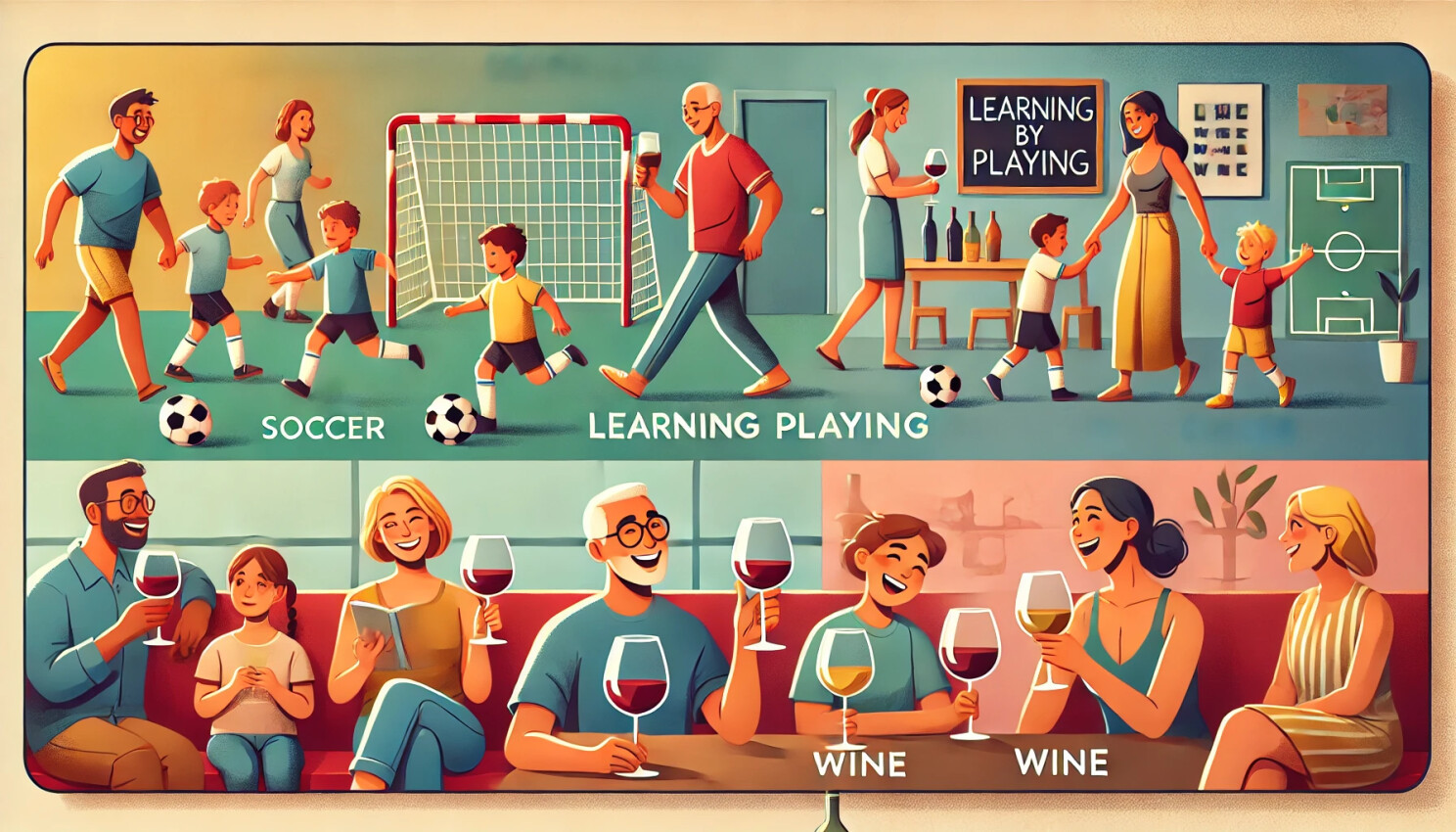
Learning by Playing: Lessons from Soccer and Childcare
This approach isn’t a radical concept. Look at soccer. You don’t need to fully understand the game to enjoy watching or playing it. When a child first sees a ball, they may pick it up, throw it, kick it, or run after it. Nobody’s there to tell them they’re “wrong” for not playing by the rules. They explore, play, and gradually learn the game, discovering the rules as they go.
My 2 years-old daughter’s experience in childcare follows the same principle. She’s learning by playing, naturally grasping new concepts at her own pace, without a rigid agenda or pressure to learn in a specific way. She explores, asks questions, and learns through curiosity and fun. Why can’t we bring the same openness to wine? Let people play with wine, explore it, and find their own path without rigid expectations or judgment.
Wine should be the same. True education isn’t about merely transferring facts or filling someone’s mind with information. Instead, it’s about sparking curiosity, inspiring passion, and igniting a desire to learn and explore independently.
"Education is not the filling of a pail, but the lighting of a fire.” – W.B. Yeats
Breaking Down the Pretentiousness in Wine
There’s nothing wrong with knowledge—climb the staircase all you like, but remember two things when you get there:
1. True wisdom isn’t shown by how much you know, but by how well you guide others with kindness.
2. Some people are perfectly happy where they are, and we should respect that.
Wine has become a symbol of sophistication, and, while knowledge can enhance appreciation, it shouldn’t be a barrier. We need to strip away the pretentiousness that has crept into our industry. There’s a difference between sharing knowledge and insisting that someone needs to learn before they can enjoy. Wine should be about inclusion, not exclusion. It should be inviting rather than intimidating.
The beauty of wine lies not in its complexity, but in the joy it brings when shared with others.
The Science of Consumer Behavior
In neuromarketing, we examine two key brain systems that play major roles in consumer behavior:
-
The Primal Brain: This instinctual part of the brain governs our survival instincts. It responds to emotions, familiarity, and sensory experiences, prioritizing comfort and making quick, automatic decisions based on past encounters. It craves ease and reassurance, moving us toward choices that feel safe, enjoyable, and uncomplicated.
-
The Rational Brain: More analytical, this part of the brain engages in conscious decision-making, processing information, and evaluating options with long-term implications. It’s deliberate and thoughtful, often influenced by detailed information, analysis, and reasoning.
How does this affect how we sell wine? Research shows that most consumers make their buying decisions using their Primal Brain, which responds to emotional resonance and sensory appeal rather than intricate details or complex descriptions. When we focus on technical tasting notes or emphasize facts, we are trying to engage the Rational Brain. But for most consumers, wine isn’t about intellectual dissection; it’s about enjoyment and connection.
“Don’t sell the steak, sell the sizzle.” – Elmer Wheeler
As Wheeler suggests, what truly sells is the experience, not just the product itself. When we insist on educating consumers in a highly technical way, we fail to connect with their emotional needs. To truly engage, we need to craft messages that resonate on a primal, emotional level—creating connections rather than constructing barriers.
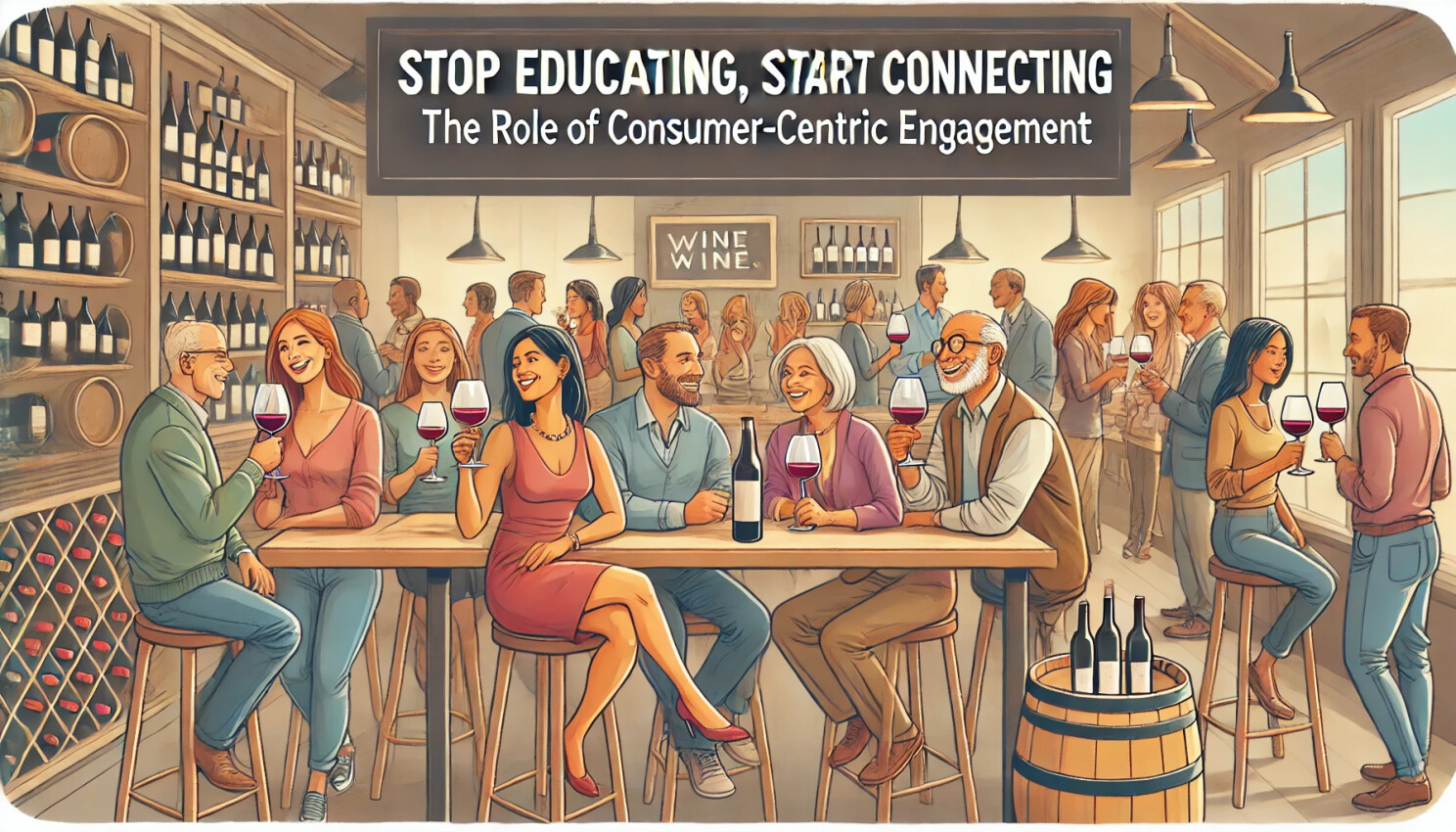
Stop Educating, Start Connecting: The Role of Consumer-Centric Engagement
“Connection is why we’re here; it is what gives purpose and meaning to our lives.” – Brené Brown
Why are we so focused on “educating” consumers when we could be creating connections through wine that resonate with their existing preferences? Wine professionals often want consumers to learn the nuances of wine appreciation—developing palates, understanding tasting notes, and appreciating high scores. But do consumers really need a manual to enjoy a glass of wine? Are they even interested in becoming connoisseurs?
Take the company Wine in Brazil, for example. They saw an untapped market among cocktail drinkers and didn’t waste time lecturing consumers on high-end wines. Instead, they created a club for sweet wines and successfully converted cocktail lovers into wine enthusiasts by offering something familiar and enjoyable. The focus wasn’t on “educating” consumers; it was on meeting their tastes and making wine accessible without pressure.
At a previous job, I was asked to lead Masterclasses to “educate” consumers. Despite our best efforts, turnout was always small, and sales were minimal. Then, I organized a Wine Fair. We booked over 200 people, and suppliers were selling cases, not bottles. Customers enjoyed the casual, welcoming experience and left feeling “excited” rather than “educated". A meaningful experience is often worth more than any lesson.
We often forget that most consumers are looking for enjoyment, not academic experiences. And if we’re honest, we don’t need deep knowledge before we enjoy something new. When I buy a new iPhone, I’m drawn to its camera and sleek design, not the intricate technology behind it. Why do we expect wine to be different?
Moving Forward: Shaping a More Inclusive Wine Industry
The wine industry has a beautiful opportunity to welcome more people by meeting them where they are, not where we think they should be. Let’s stop trying to “convert” consumers and start celebrating their enjoyment—whatever form that takes.
Let’s keep asking the tough questions. Is our obsession with “educating” the public actually holding the wine industry back? Should we let go of this insistence that wine must be “understood” to be enjoyed, and instead, make it accessible for everyone who wants to join the journey?
I, for one, will keep speaking up about this. The wine industry is at a turning point, and if we’re going to grow, we need to adapt. It’s time to stop defining wine by rigid rules and start defining it by the joy it brings to all kinds of people, wherever they are in their wine journey.
“The purpose of education is to replace an empty mind with an open one.” – Malcolm Forbes
A Call to Action: #RethinkingtheWineIndustry
It’s time to take a fresh look at wine communication. Let’s move beyond technical tastings, factual lessons, and rating scores to foster genuine connections, spark curiosity, and build lasting loyalty. Wine isn’t just a drink; it’s an experience that brings people together, inspires them, and creates unforgettable memories. Instead of reducing wine to a rigid structure, let’s embrace the creativity, individuality, and joy it can offer.
Let’s start this conversation and make a real impact. Follow and share the hashtag #Rethinkingthewineindustry, share posts with your beliefs and make everyone aware that our industry needs to change. Let’s discuss how we can make wine more accessible, inclusive, and enjoyable for everyone. Together, we can shift wine communication from a narrow focus on taste and facts to a broader exploration of connection, experience, and personal discovery.