Priscilla Hennekam
Released 28 Oct, 2025
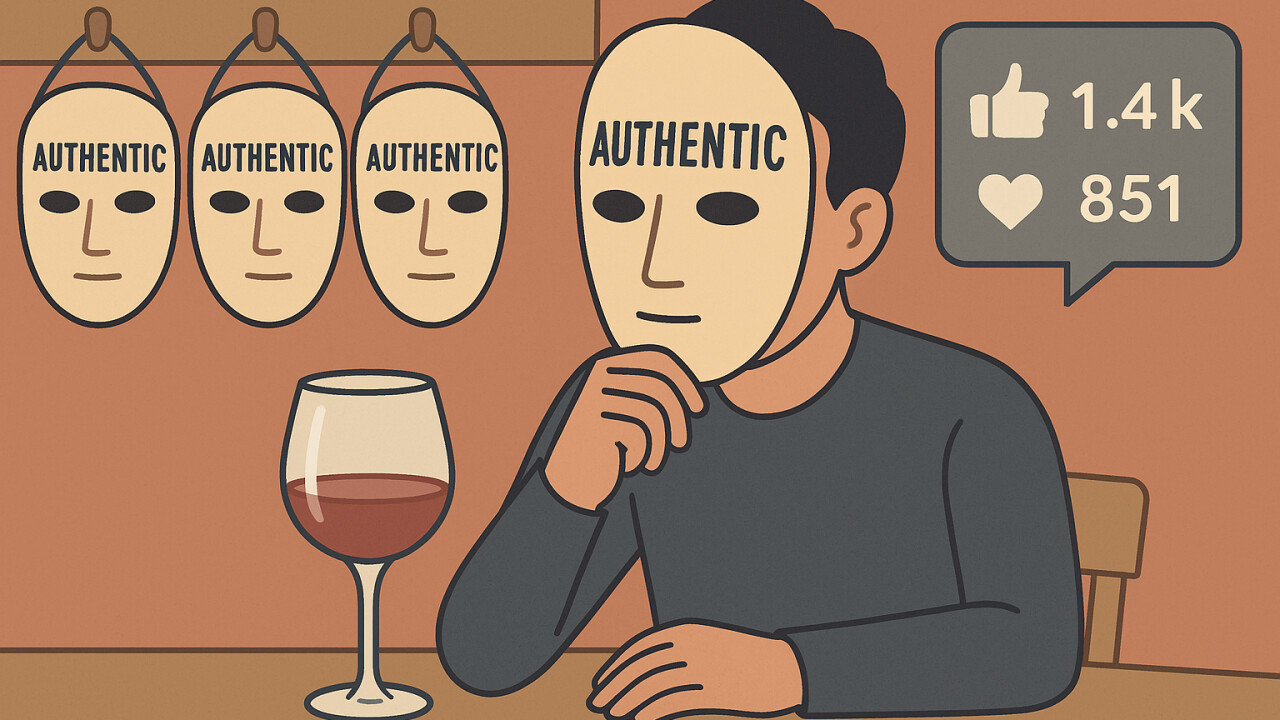
We all love to say we are authentic. Every brand, every experience, every voice online leans on that word.
But how authentic can something be if thousands are offering the same thing? The same wine photos, the same captions, the same “walk with the winemaker”. Authenticity has become a script we all copy to feel safe.
The truth is when you say or do something different, you risk rejection. You risk being left outside the group. We risk not belonging. Which means that for many of us, being authentic doesn’t feel like a choice anymore.
So what do we do? We chase what feels safer, visibility. We copy what’s rewarded by the algorithm. We trade uniqueness for recognisability. And little by little, we stop wanting to be authentic at all, we just want to be seen. And slowly, we stop asking what is real and start asking what is viral**.**
But viral brings what? Does being seen equal being trusted? Is visibility the same thing as credibility?
I wrote this piece to spark that reflection, to help us re-evaluate what is truly ours, what is just copy-and-paste, and how algorithms have been quietly manipulating us. It’s a call for consciousness. A reminder to examine not just what the world is becoming, but what we are becoming inside it.
Because if we keep trading truth for clicks, we risk waking up one day unable to answer the simplest question of all: What is real?
[center]
[/center]
Rethinking Wine is a community that brings consciousness, challenges realities, and keeps us from being trapped in a world shaped only by algorithms and repetition. Join us, leave your email, and be part of this evolution. Be part of the launch of our platform: Click Here
THE PHILOSOPHICAL SHIFT
We Are Being Programmed for Performance
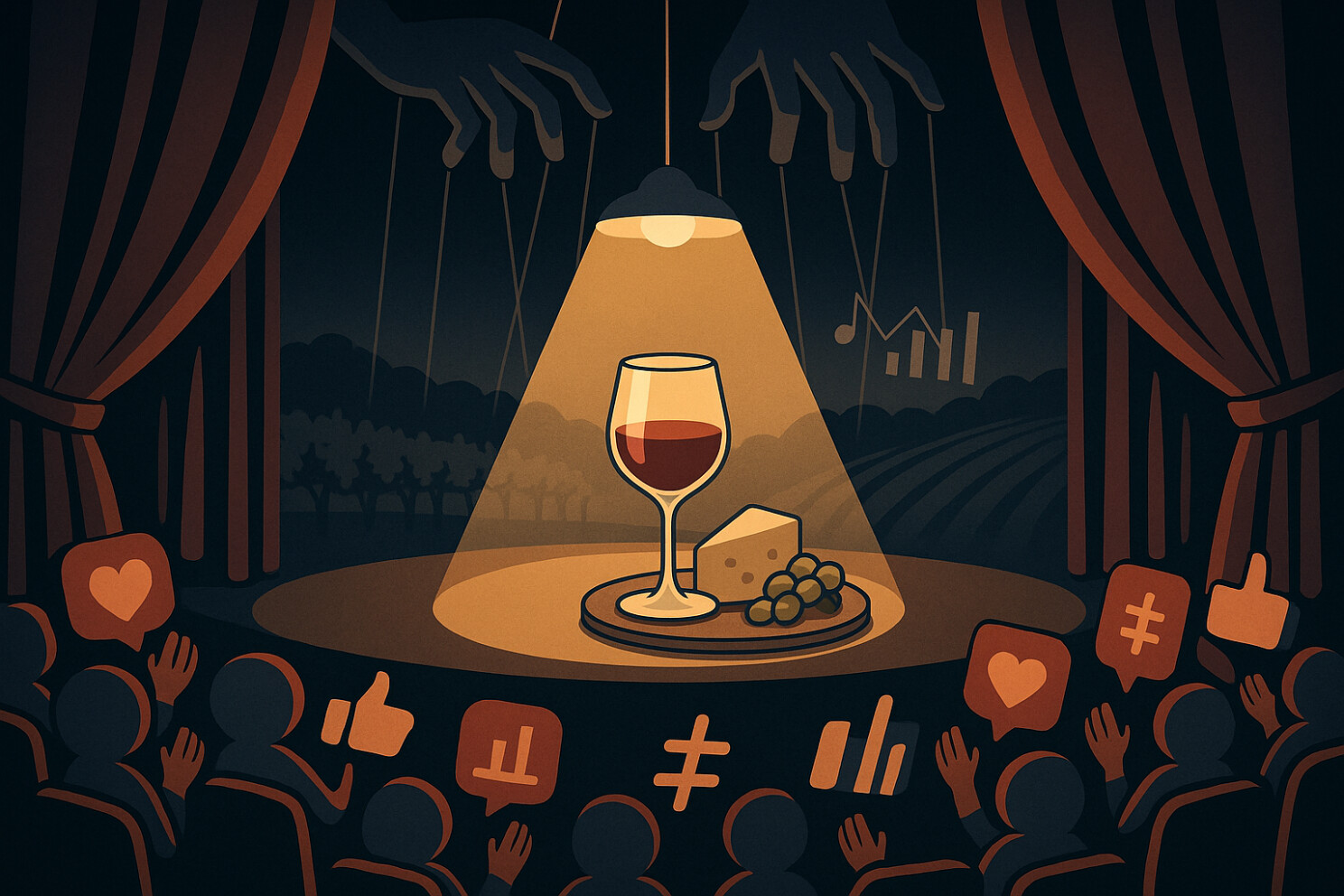
Today, more and more of our decisions are shaped by metrics we don’t even notice.
Likes. Reach. Virality.
These numbers have become silent puppeteers, guiding what we post, how we dress, what we say, and even how we experience wine.
We don’t just enjoy wine anymore. We stage it. The tasting experience has been repackaged and replicated, continent to continent, until it becomes indistinguishable.
Cheese plate? Check. Barrel room photo? Check. Perfectly angled wine glass? Check.
We have traded uniqueness for recognisability. And in doing so, we’ve drifted from authenticity into simulation.
Baudrillard Was Right
In 'Simulacra and Simulation’, Jean Baudrillard outlined four stages of how representations evolve:
-
It reflects reality. A winemaker shares a story about the land, the family, the vintage. It feels real.
-
It distorts reality. The story becomes stylised, romanticised, shaped by marketing.
-
It pretends to be real. It’s no longer based on truth, just looks like it could be.
-
It becomes pure simulation. A performance of authenticity, with no original.
Sound familiar?
Wine has become a simulation of itself. We crop out the labour. Reuse the same tasting formats. Recreate the same “walk the vines” experience with new logos. Even our “disruptive” events follow predictable templates. And nowhere is this clearer than in the way we talk about terroir.
Take, for example, the geological claims that fill tasting notes and wine lists. We’ve all read them: “This Austrian Riesling has complexity because of the slatey para-gneiss, amphibolite and mica soils.”
It sounds impressive, but does it actually tell us anything?
Scientists like Professor Alex Maltman argue that while soils shape drainage and vine stress, vines are not “drinking rocks”. Grapevines build themselves largely from sunlight, air, and water. The idea that slate, flint, or schist directly flavours your wineglass is far more metaphor than measurable fact.
This is exactly what Baudrillard warned us about. When representation becomes detached from truth, it slides into simulation. We stop chasing what is real and start repeating what is believable.
So the question becomes: if even the story of terroir can become a copy-and-paste performance, how much of what we say in wine is truly ours, and how much is just borrowed language, rewarded by repetition?
We are not innovating. We are imitating.
And Baudrillard warned us:
When simulation replaces reality, we lose the ability to tell the difference. And when that happens, we stop chasing truth, and start chasing believability.
What Even Feels Real Anymore?
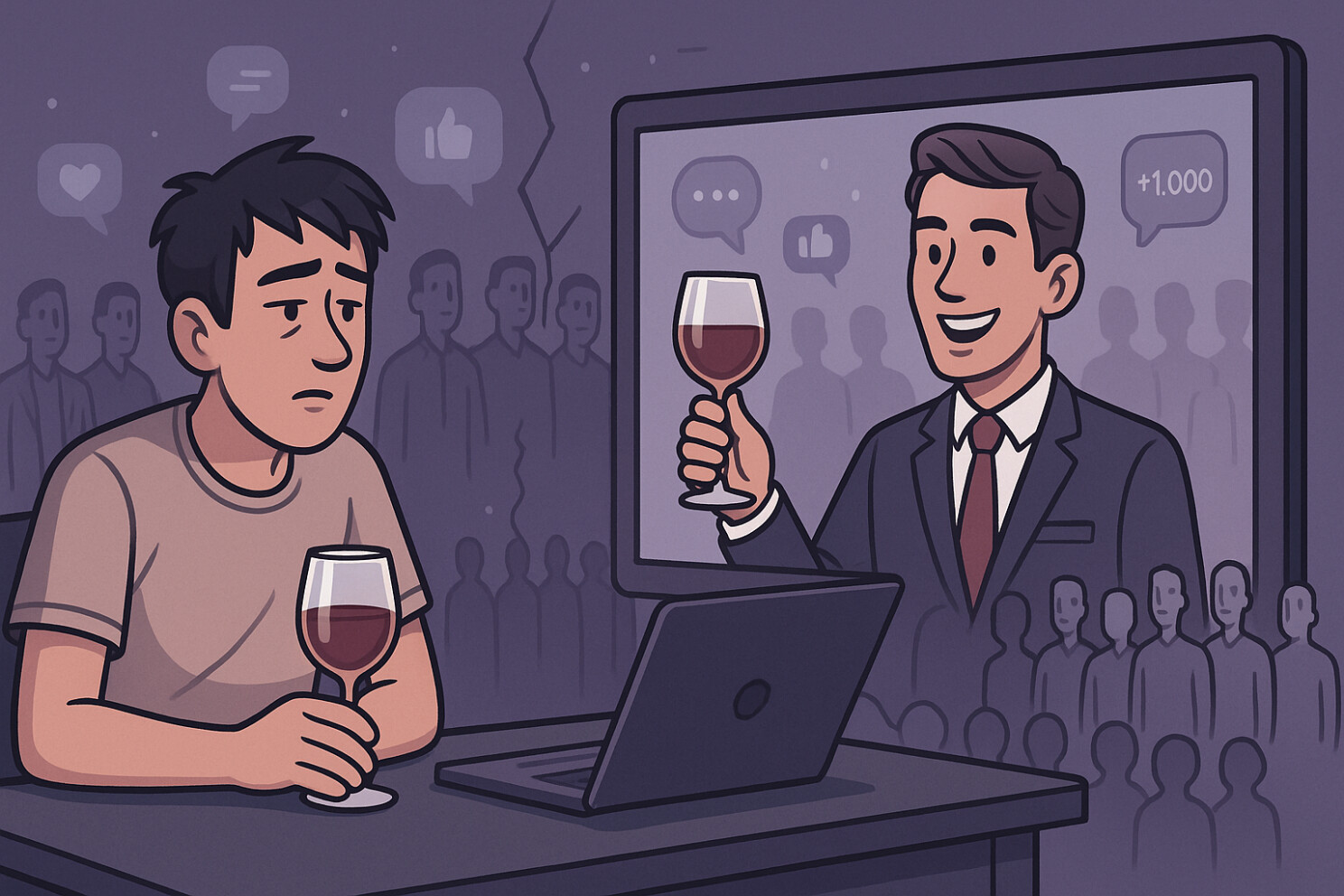
ProxyTwin is a new AI platform that creates digital replicas of people - your face, voice, energy, mannerisms. Your AI twin can present at meetings, give talks, answer questions… while you’re with your family.
This may sound surreal, but it’s already live.
But this is not the beginning of the problem. ProxyTwin is just a mirror. It reflects what we already do - optimise, rehearse, perform.
Instagram smiles. Branded talking points. Auto-generated emails.
The truth is: we’ve been avatars for a while**.** ProxyTwin just made it obvious.
And now we must ask:
-
If my presence can be simulated… what becomes of connection?
-
If my voice can be programmed… am I still the author of my message?
-
If everyone is a proxy… what happens to the real?
Another Mirror: Meta’s Celebrity AI Avatars
Meta recently launched AI avatars of celebrities - Snoop Dogg, Tom Brady, Kendall Jenner. They chat with you, respond to prompts, give advice.
It’s the same idea: digital intimacy without human presence. So again we ask: If we can be everywhere, do we still need to be anywhere?
The Cost of Belonging
We say we want authenticity. But what we often crave more… is BELONGING.
That’s why we mimic trends. That’s why so many wine brands, events, and bars feel interchangeable.
It’s safer to be recognisable than to be misunderstood.
But safety has a cost.
Every time we choose recognition over risk, we dilute identity, until we wake up unsure of what’s truly ours.
True authenticity doesn’t guarantee applause. It often invites silence, discomfort, or rejection.
But it also builds the only thing performance never can: Trust.
THE BRAND STRATEGY SHIFT
Presence Isn’t the Goal. Resonance Is.
The wine world is full of people “showing up”.
Winemakers flying across continents. Brand ambassadors pouring at dinners. Executives delivering talks. Everyone performing presence, because we’ve long believed: presence equals power.
But in a world where presence can be programmed - by avatars, bots, AI twins - showing up is no longer enough.
What matters now isn’t presence. It’s resonance. Not just being there, but being felt.
Your ProxyTwin can say all the right things. But it can’t mean them.
And that’s the future of branding: Not performance. Not presence. But PURPOSE.
The Copy-Paste Crisis
Look around:
-
The same bottle shots.
-
The same tasting notes.
-
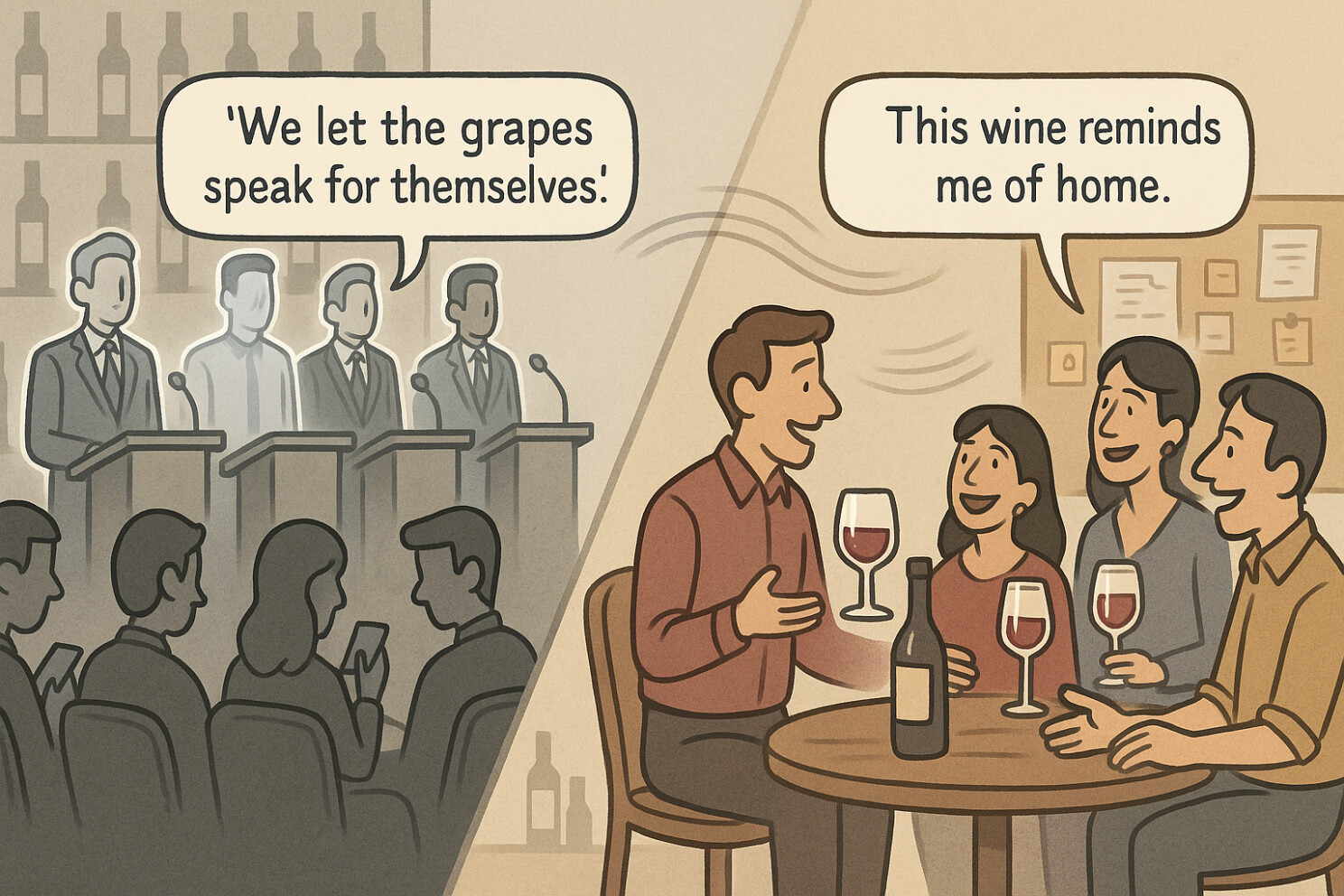
The same “we let the grapes speak for themselves” taglines.
-
Websites written for critics, not consumers.
-
Hospitality that performs education, not conversation.
-
Packaging that mimics Napa or Burgundy - even when the drinker is in Rio, Seoul, or Cape Town.
Why?
Because we are scared.
Scared of invisibility. Scared of being “wrong”. Scared that if we try something new, no one will come.
So we follow the script. We dress our brands like luxury. We use the same language. We copy what the algorithm rewards.
But slowly, we forget who we were before the script.
So What Do We Do?
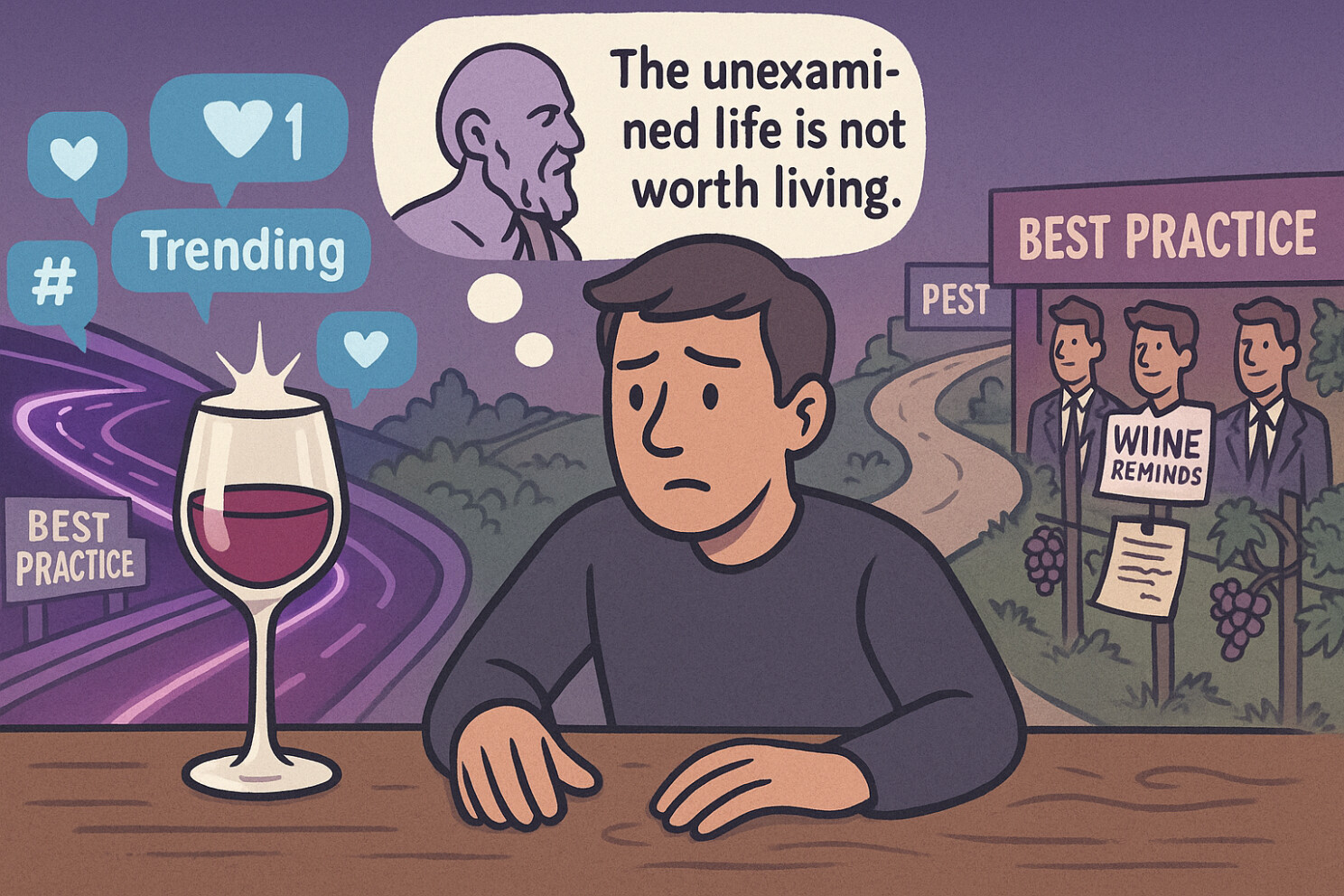
Let’s return to Socrates:
“The unexamined life is not worth living.”
We call it best practice. We call it strategy. We call it smart use of the algorithm.
But Socrates might call it something else: Unexamined life.
In a time of simulation, we must examine more than ever. Not to reject technology, but to use it with intention.
Ask yourself:
-
Am I creating this because it’s true, or because it’s trending?
-
Is this story mine, or someone else’s?
-
Is this experience designed for discovery, or for Instagram?
-
Are we building brands, or broadcasts?
Wine Doesn’t Need to Be Perfect. It Needs to Be Real.
And in a world of deepfakes and digital twins… Real might just become the rarest luxury of all.
FIVE QUESTIONS EVERY WINE BRAND SHOULD BE ASKING
-
Are we expressing our story, or replicating someone else’s?
-
Do our digital touchpoints build trust, or just grab attention?
-
If someone met our brand in real life, would it match what they’ve seen online?
-
What feeling do we want to leave behind in every interaction?
-
If we could only show up once - no avatars, no posts - what would we want to be remembered for?
FINAL REFLECTION: The Brands That Win Will Feel Human
The future of wine communication won’t belong to those who automate the most. It will belong to those who still feel human, even in a world of infinite proxies.
People aren’t looking for more perfection. They’re looking for signals of life. For friction. For quirks. For meaning.
If your brand can offer that - consistently, honestly, and without performance - then it doesn’t matter who shows up on screen.
Because people won’t remember what your avatar said. They’ll remember how you made them feel. And no proxy can do that for you.
Break the copy-paste cycle. Rethink wine, rethink yourself. Be part of the launch of Rethinking Wine platform, Click here.