Marco Baldocchi
Released 1 July, 2025
I have to confess something…
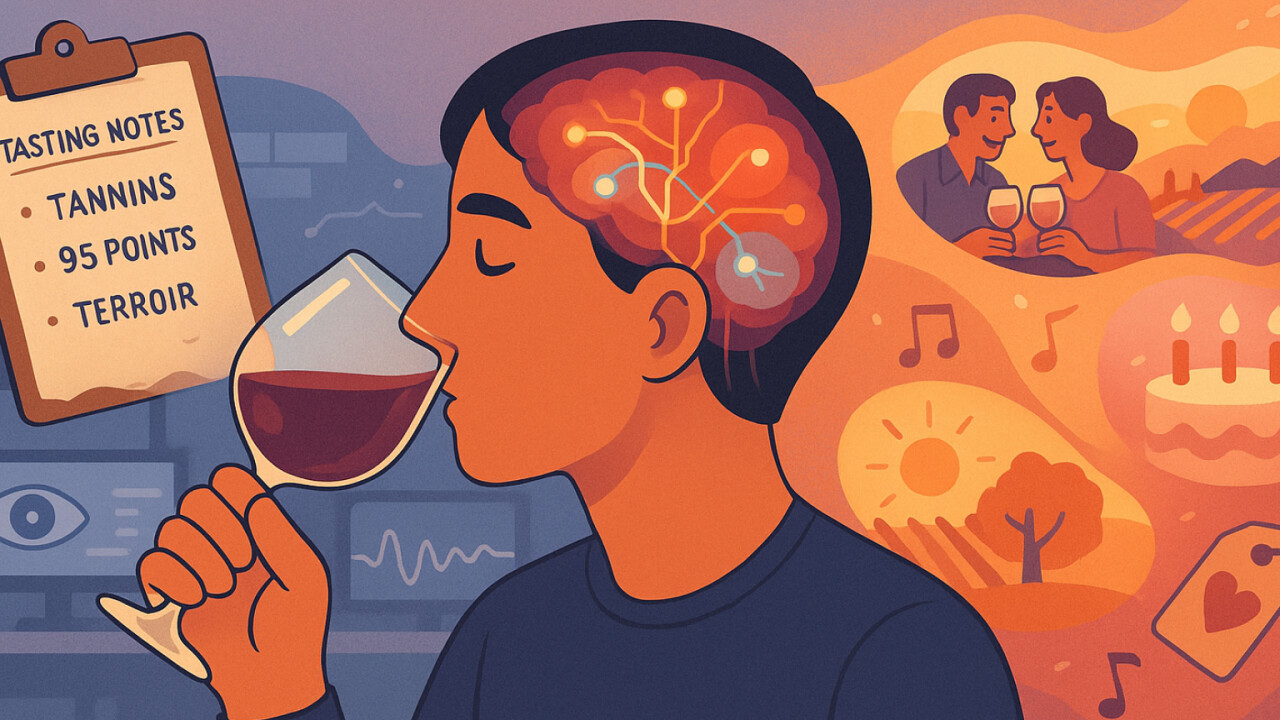
These days, I don’t feel excited about wine tastings anymore. Because I already know exactly how it’s going to go: someone talks, I listen. A one-way monologue filled with the same familiar script - “the best wine”, “the best vineyard”, “the best winemaker”, “12 months in barrel”, “95 points”, “this terroir is unique”…
Again and again. The same words. The same ritual. No surprise. No spark. No real exchange.
I leave those tastings with a sense of emptiness. As if I’m trapped in a cycle that no longer moves me. I’ve realised that many of us have been “programmed”, almost like robots, to act, speak, and feel the same way.
What I miss is the authenticity of people. The honest laughter, the spontaneous moments, that spark that makes us feel alive. That’s what made me fall in love with wine in the first place… not the “best vineyards” or the 12 months in oak with notes of strawberries and plums.
And that’s why this week’s piece matters so much.
We’re honoured to welcome a guest who doesn’t just understand that wine is emotional, he proves it. Marco Baldocchi is one of the world’s leading voices in consumer neuroscience and neuromarketing. Based in Miami, he’s the founder and CEO of Neuralisys Inc., a TEDx speaker, a member of the Insight250 global list, and the inventor of Emotivae Sense - an AI tool that tracks emotional response in real time. His work has been featured in Forbes, and his influence spans across academia, marketing, and sensory innovation.
In this powerful piece, Marco shows us what happens when we stop talking about wine, and start listening to what wine does to us. From multi-sensory experiences to the neuroscience of pricing and storytelling, this article opens a new path, one that leads not to the best score, but to the deepest connection.
Let’s #rethink, together.
The Rethinking Wine platform is a shift in mindset
[center]
[/center]
The wine industry is fragmented. Too often, we work in silos: producers over here, marketers over there, educators in another room. We rely on tradition, prestige, and scores, but those don’t build connection. And they don’t reflect the world we’re entering, where consumer values are changing, attention is scarce, and trust is earned through relationships, not titles.
That’s the challenge we’re tackling. We are building a network that turns knowledge into action, ideas into experiments, and connections into value.
Rethinking.Wine is a collaborative space for wine businesses and wine professionals. A place where people from different corners of the industry come together to learn faster, adapt better, and co-create what comes next.
We’re not here to replace tradition, we’re here to unlock what’s possible when tradition meets innovation, when passion meets purpose, and when people come together to solve problems.
We’re still building. And we need people like you - curious, creative, collaborative - to help shape what comes next.
If you want to join us, or help us face the next challenge, add your email to the waitlist - Click here - Why Neuroscience is the Key to Wine’s Emotional Future
By Marco Baldocchi – Consumer Neuroscience & Neuromarketing Specialist
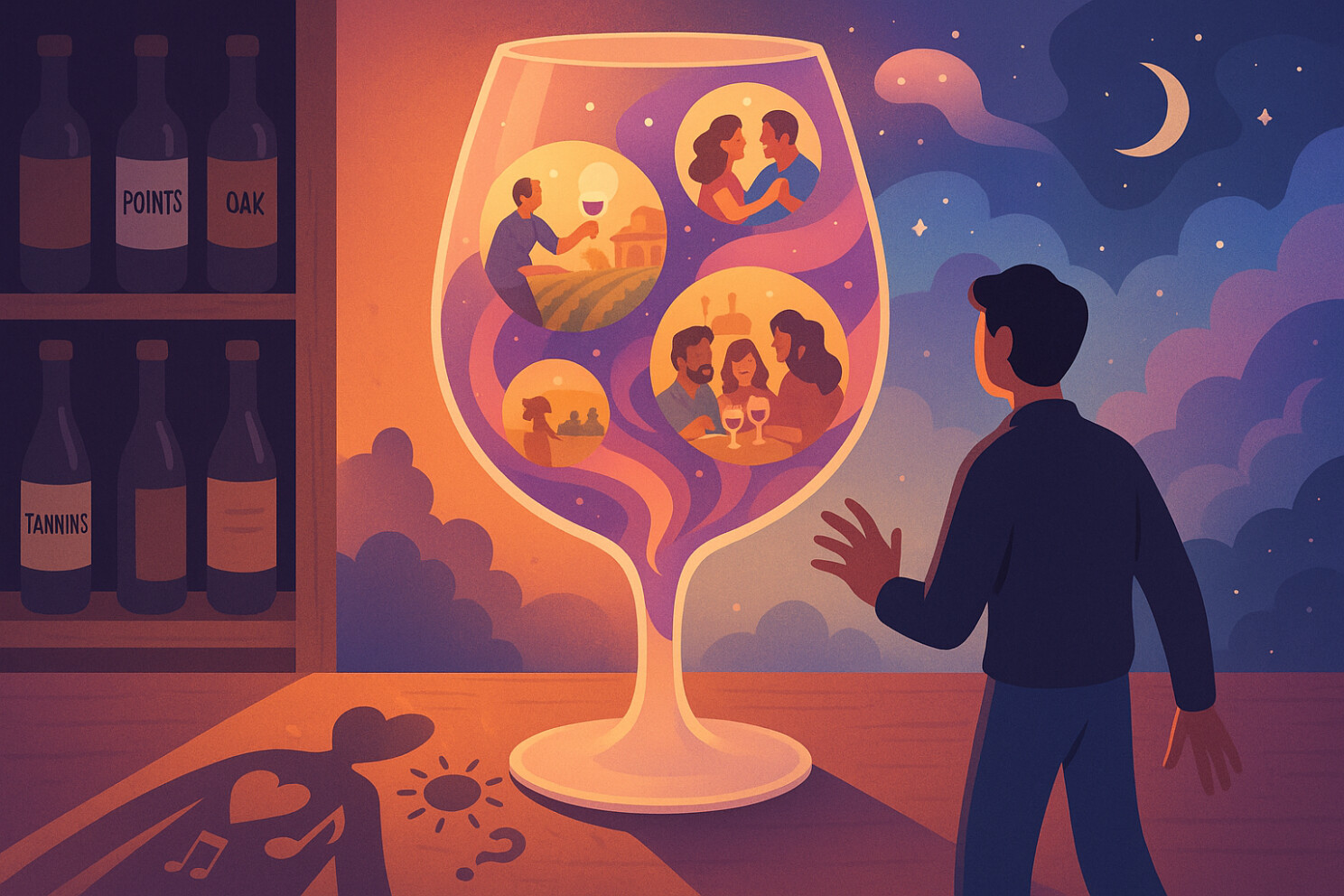
The wine industry is undergoing a quiet revolution. And no, it’s not about grape varieties, biodynamic certifications, or the return of orange wines. It’s about how wine makes us feel. Not what it tastes like. Neuroscience tells us that when we drink wine, we don’t just analyze tannins or acidity - we process memories, expectations, emotions. Wine is processed by the brain like a story, not like a chemistry set.
This is the core of my work in applied neuroscience. After contributing to a feature in Forbes on emotional decision-making in wine marketing, I was invited to write this piece for those who are ready to rethink wine - not from the perspective of the palate, but from that of the prefrontal cortex, amygdala, and limbic system. Because wine is not just a drink. It’s a trigger. And understanding how that trigger works can change everything - from how we sell wine to how we design experiences around it.
What Is Consumer Neuroscience (and Why Wine Needs It)?
Consumer neuroscience is the application of brain science to understand how people unconsciously react to brands, products, and sensory experiences. We use tools like EEG, facial coding, eye-tracking, and implicit tests to decode what consumers really feel - beyond what they say in a survey.
In wine, this means going beyond focus groups and tasting notes. It means asking: What emotions are triggered when someone holds a bottle of Chianti Classico? What memory associations are activated when they see the word “Riserva”? How does lighting, music, or even price alter the emotional reading of a wine?
In short: consumer neuroscience gives us access to the emotional mechanics behind wine perception - and that changes everything.
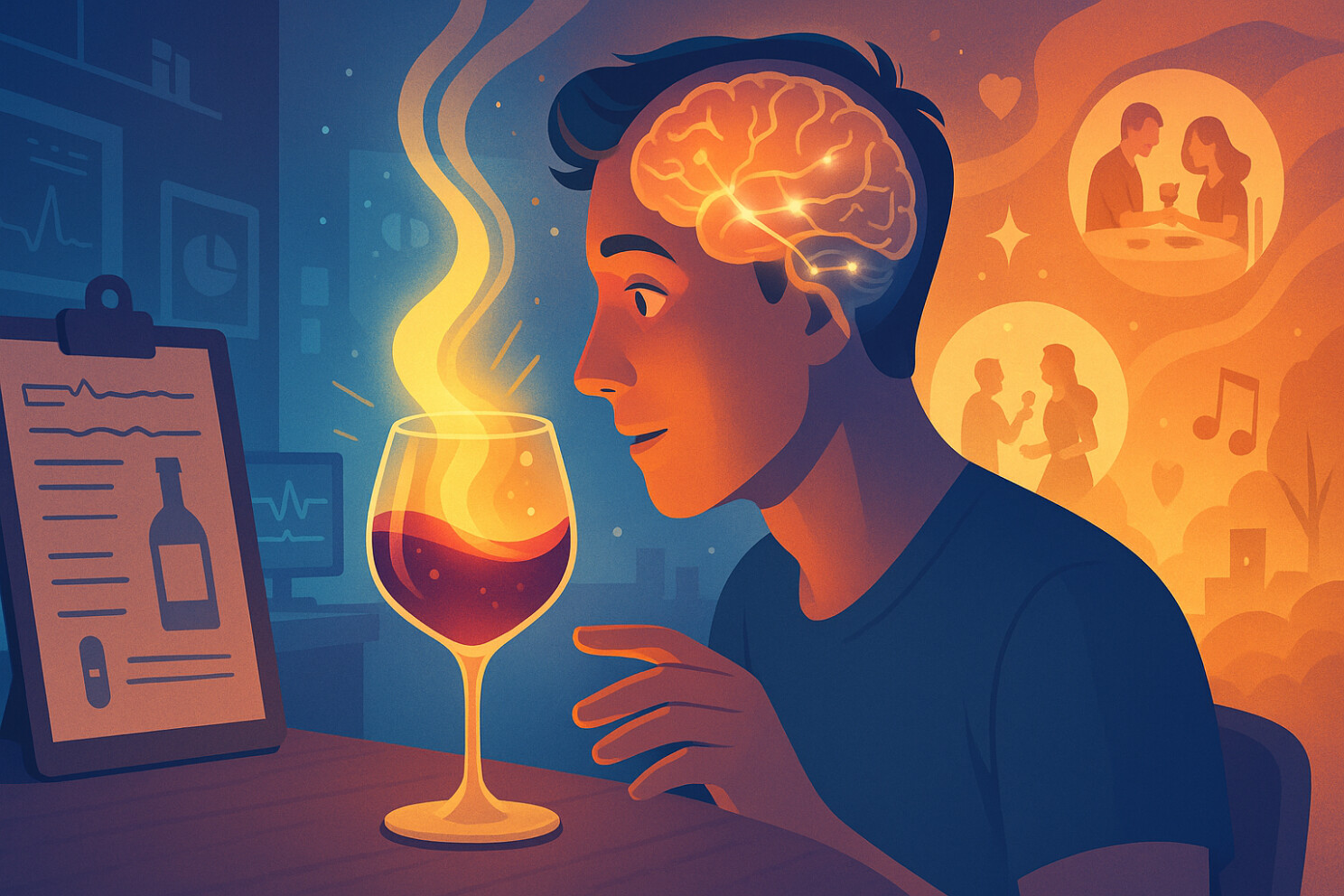
The Brain Doesn’t Taste. It Feels.
Pedroza & Herrell (2022) conducted one of the most insightful studies to date on the relationship between emotional response and wine perception**.** Their goal wasn’t just to record stated preferences - it was to understand how deeply emotional engagement influences the perceived quality of wine.
Participants were invited into a controlled tasting environment where sensory conditions -lighting, temperature, sound - were standardized to minimize external bias. Each subject sampled a series of wines and reported their impressions using affective self-report scales. But more importantly, their physiological responses were recorded using biometric technologies, including facial expression analysis (to detect involuntary micro-expressions tied to primary emotions) and galvanic skin response (GSR), which measures arousal through subtle changes in skin conductivity.
The results were striking: emotional reactions - especially the unconscious ones - were more predictive of perceived quality than traditional tasting notes or verbal descriptors. In other words, it wasn’t about what the wine objectively was; it was about what the wine emotionally triggered.
Their conclusion was clear: perceived wine quality isn’t just about phenolic compounds or barrel aging - it’s about emotional congruence. If the brain doesn’t emotionally engage with the wine, it doesn’t matter how technically perfect it is. No emotional response? No perceived value. If the brain doesn’t feel it, the wine might as well be water.
These findings align with parallel research using EEG, which shows that the brain’s early attentional mechanisms - activated within the first 200 milliseconds - respond more strongly to emotionally relevant stimuli: a well-designed label, a powerful story, an elegant contrast in color. And yes, the same bottle of wine, tasted under different emotional conditions - say, joy versus stress - is perceived completely differently.
The reason is simple: our brains don’t just receive sensory input; they build expectations from it. These expectations are then either confirmed or violated during the tasting experience - and that’s where emotion spikes. When expectations are exceeded - because of the setting, the narrative, or a sense of personal resonance - the brain releases a reward signal.
At that moment, the wine isn’t just a beverage. It’s a neurochemical event. A feeling. A story.
And science is now making that story visible.
Multisensory Marketing: The Synesthesia of Wine
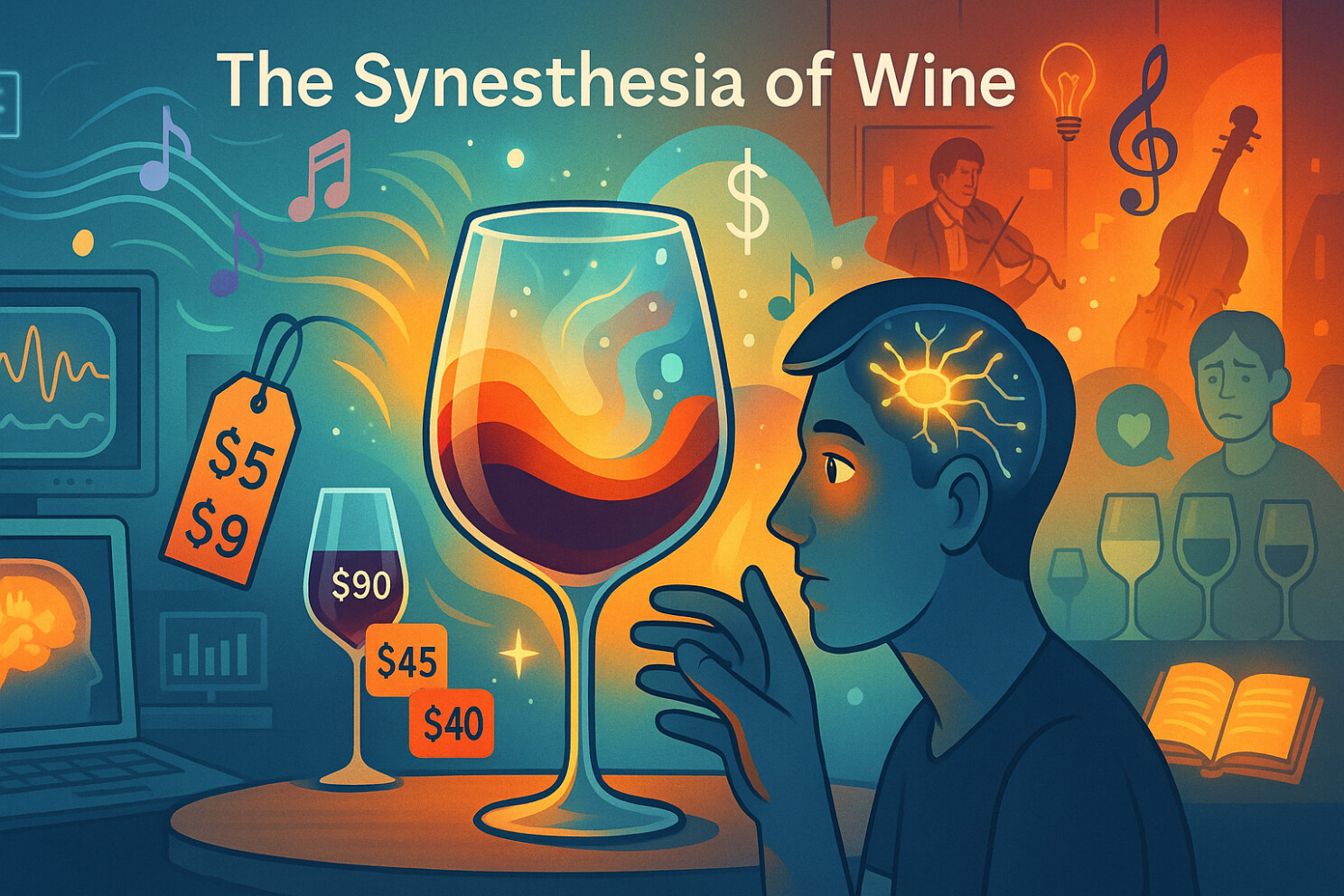
Neuroscientist Charles Spence (Oxford University) has shown through multiple experiments that cross modal correspondences - how sound, light, and touch interact with taste - play a huge role in wine perception. In a 2017 study published in Flavour, Spence and colleagues asked participants to drink the same wine while listening to different types of music. Participants reported the wine tasting “richer” with low-pitched cello music and “sharper” with high-pitched piano music. This phenomenon is now known as sonic seasoning.
Ambient light also matters. A study conducted by the Polytechnic University of Valencia (2014) exposed participants to wines under different colored lights. Red and blue lighting increased perceived sweetness and liking scores, while green light decreased preference.
Even the glass shape can bias expectation and alter the tasting experience. Our brain fills in the blanks long before the first sip.
The implication? Wine is not just a product. It’s a multisensory event.
The Power of Expectation (a.k.a. The Price Effect)
Plassmann et al. (2008) at Caltech conducted a landmark fMRI study in which participants tasted wines labeled with different prices - $5, $45, and $90 - though all wines were in fact identical. Brain scans revealed increased activity in the medial orbitofrontal cortex (linked to pleasure and value) when participants believed they were drinking the more expensive wine. They weren’t just pretending to like it more - their brain actually experienced more pleasure.
More recently, Geraldine Coppin and colleagues (2021) used emotional rating scales and facial EMG to evaluate consumer response to wine under different narrative and branding conditions. Their findings: emotional responses were significantly enhanced when contextual storytelling and price were aligned. This effect was strongest in participants with little formal wine knowledge - suggesting the power of expectation is greatest where uncertainty exists.
That’s why neuroscience matters. Because it explains behavior that traditional research can’t.
Real-World Application: Designing Wine for the Emotional Brain
At Neuralisys, we work with wineries, retailers, and wine tourism operators to decode emotional engagement in real time. Using facial coding and implicit tests, we’ve mapped how consumers respond to different wines, labels, experiences. And the findings are clear:
-
Emotion predicts intent to purchase better than verbal preference.
-
Design elements (color, fonts, shape) influence emotional memory.
-
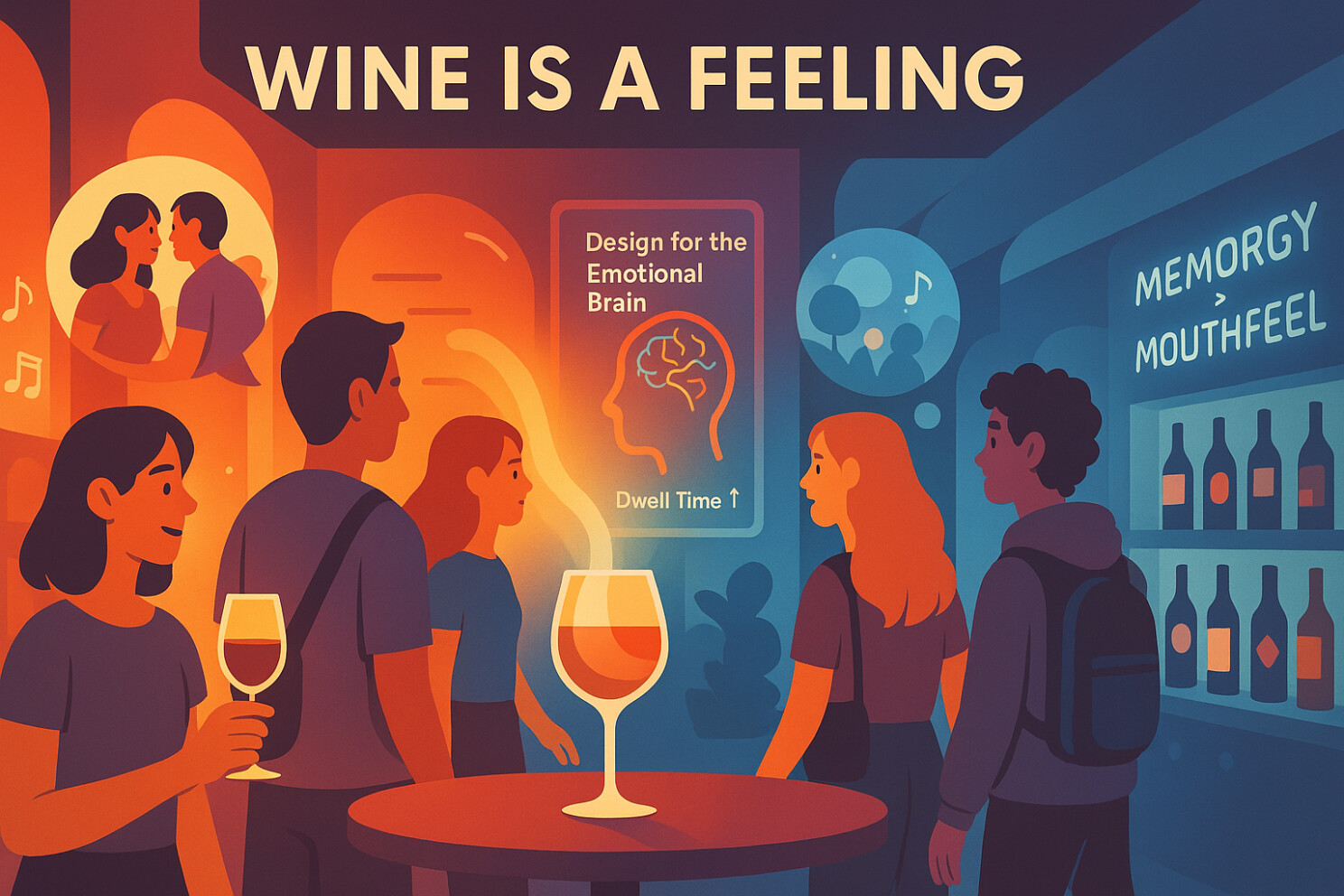
Music, light, and scent can extend dwell time and deepen brand connection.
A recent project with a boutique winery in Napa Valley showed that changing the tasting room’s music and lighting increased emotional engagement by 36%, and dwell time by 22%. Same wine. Same people. Different brain state.
Toward a New Wine Culture
The future of wine isn’t about pushing tradition harder. It’s about creating emotional relevance for new audiences - Millennials, Gen Z, experience-seekers. These consumers aren’t looking for wine knowledge. They’re looking for emotionally resonant stories, atmospheres, and identities.
If we want them to fall in love with wine, we must design wine experiences the way we design music, film, or perfume: through the lens of emotion.
Let’s stop assuming people choose wine based on taste alone. Neuroscience proves otherwise.
They choose based on memory, expectation, ambiance, and emotion.
Wine Is a Feeling
This is not a metaphor. This is how the brain works. And if the industry embraces it, we can finally move from selling a product to creating meaning.
Wine is not evaluated in the mouth. It’s evaluated in the mind.
And that mind is emotional.
Meet the Author:
[center]
[/center]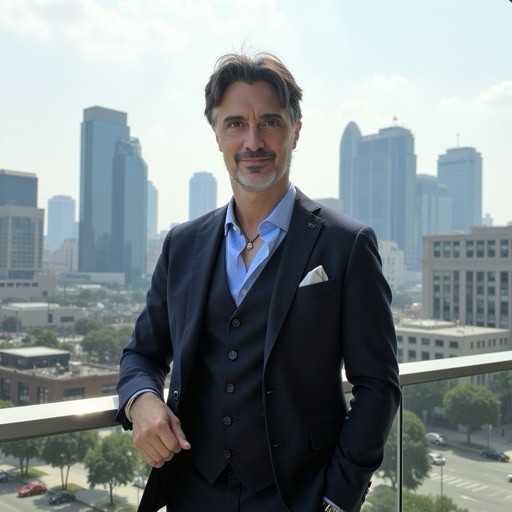
Marco Baldocchi is the founder and CEO of Neuralisys Inc., based in Miami. He serves as Director of Neuromarketing Research at the National Association for Applied Neuroscience and is a founding member and Head of Research at ONCEMS (National Observatory of Communication and Marketing for Sustainability).
Marco is the author of several books and scientific publications, and a speaker at national and international events. He lectures at 24Ore Business School, Università Cattolica of Milan, and Florida International University (FIU). He is a member of the Neuromarketing Science & Business Association (NMSBA) and was ranked among the Top 10 Best World Speakers in the Neuromarketing Series 2021.
He is also a member of the Miami Scientific Italian Community (MSIC). In 2023, he was included in the prestigious Insight250 list, which honors the top 250 global experts in marketing and consumer behavior. That same year, he was selected for inclusion in the international edition of Marquis Who’s Who, ranking in the top 3% globally in the fields of consumer behavior, neuromarketing, and neurobranding.
He was a TEDx speaker in 2023 in both Miami (US) and Lucca (Italy). His company was named “Most Scientific Marketing Agency 2023 – Southeast USA” at the Media Innovator Awards. In 2025, Marco invented and patented Emotivae Sense, an AI and neuroscience-based software that detects emotions in real time through facial micro-expression analysis. Once emotions are recognized, Emotivae Sense can adjust environmental factors - such as lighting, sound, color, and scent - to help regulate and rebalance negative emotional states.
Research sources & References
1. Pedroza, V., & Herrell, L. (2022) – Exploring Emotions as a New Quality Parameter in Wine
2. Plassmann, H., O’Doherty, J., Shiv, B., & Rangel, A. (2008) – Marketing actions can modulate neural representations of experienced pleasantness
3. Coppin, G., Sander, D., & Delplanque, S. (2021) – The influence of contextual information on the affective evaluation of wine 4. Spence, C., Velasco, C., & Wang, Q. J. (2017) – “Sonic seasoning”: Enhancing the taste of food through sound
5. Xiu, L., Zhang, Y., & Wang, H. (2024) – Temporal dynamics of emotional and rational message processing: An ERP study
6. Gil-Muñoz, R., & Martínez-Cutillas, A. (2014) – Lighting influences on the perception of wine
7. Spence, C. (2017) – Gastrophysics: The New Science of Eating8 - Baldocchi, M. (2024) - Neuralisys internal research